Summary
Key Responsibilities
Product Designer for the App.
Working closely with the client leadership & development team.
Absorb the tone and message of the product philosophy throughout the design.
Set expectations for users and streamline the onboarding flow.
Later design the Vendor Platform Experience.
Achieved Metrics
Increased completed user onboarding by 70%
Increased weekly engagement of the app by 45%.
Achieved a 95% data banking rate.
Doubled the weekly data trades per user.
The Mission
Interrogate the mindset around personal data and reposition it as a new “asset”.
With highly invested vendor, OkTY has a great deal of potential in this new market. Despite strong new value for both users and the partners the lengthy requirements to setting a user up created high drop-offs and low trade engagement.
The real problem presented was getting new users to strongly align with the potential of trading their personal data. which proved difficult, as many drop off before the proof of promise can realised.
Core Pain Points
Unproven Value
People struggle to envision how simple and common place the trading of data is, and even more so that they be in charge of it.
High scepticism is currently only combated through extensive education of the data industry.
Onboarding issues
With a unfamiliar promise, and a long list of sensitive information required, its no surprise that many users are dropping off.
From Social security to Bank feeds, these data points are not only a technical necessity, but legal requirement.
Unfamiliar behaviour
Defining Success
Goals
+20%
Completed Onboarding
1.4 p/w
Trade Engagement
Increase the average weekly data trades per user from 1.1 to 1.4 per week average.
>60%
Data Banking Rate
Increase enablement of data banking from 40% to 60%.
Research
Digging Deeper
Being so integrated in the startup scene allowed OKTY to have deep knowledge on what brought the partners & brands value, but their confidence around user reactions and expectations left more detail to be desired. As a result we decided it was valuable to perform additional targeted user research.
Approach
Hypothesis
How might we explore more constructive ways of generating value and proactively address areas of trust
Characteristics
Semi-Structured Interview Methodology • Center 50% Target Demographic • 12 participants
Who are the OkTY's users?
Those who want to be financially savvy and looking for new ways to achieve that.
Individuals looking for ways to get ahead and make their spending more efficient, initially targeting those typically aged between 21 - 45.

Area of Focus — 01 The Data Topic
How do our users think about their data?
All of the interviewees none had never much through to it.
In fact none but one, had ever seriously engaged with the T&C’s of any of platforms they use. Which also meant to being unaware to what extent explicitly of their data was being forfeied
Participants did not feel like they are missing out on this invisible trade. Putting OkTY’s offering more in the category of “want” rather than feeling like a “need”.
Users also lacked the tools to evaluate personal data worth. Often only being described with vague ideas of “privacy”.
The data market was sometimes referred to as “Big Data”, and then more or less forgotten.
What was clear
The question has to first be posed → then they can be open to a mindset change.
A notable scepticism exists in the “How” of taking part in data brokerage.
Autonomy & visibility of Personal Data very limited, aligning with transparency & control values of OkTY's strategy & ethos.
Area of Focus 02 — What could make Trades valuable?
What do people want in return?
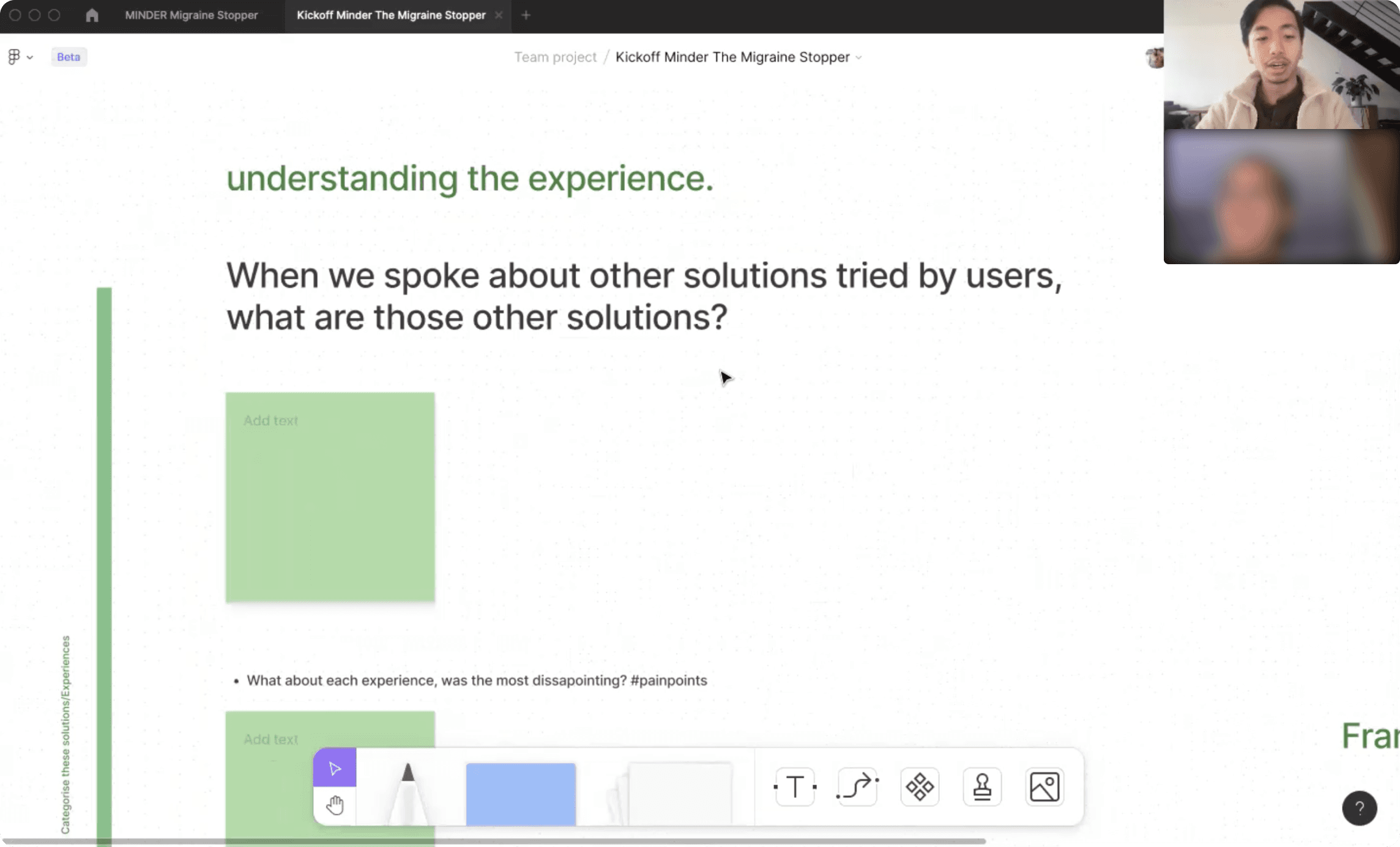
Mirroring interior discussions around a points scheme or cash payment, I posed an open exploration, facilitated by a layout of exisiting solutions and examples.
Regarding the points side, many we’re discouraged by existing “schemes” and even when entertained, initial feelings of apprehension due to the complexity.
Regarding cash, their focus if there was a limit, what was being traded, and how to track data and transactions.
What was clear
Points system require additional learning, this could prove troublesome as it would be additional to learnings required around data brokerage.
Initial perceived value of points sceptically lower, due to existing schemes.
i.e Qantas, Everyday Rewards.
Some users expressed they did not see the need for “gamification”.
Shipped solutions
Securing time for users to learn & get invested.
Taking users sentiment into account, we approached onboarding with two distinct strategies.
First was re-mapping of the way we ask them to onboard, using features to justify the "sensitive" & vast sign up requirements.
The second is taking OkTY's promise, and using it to prove the value during registration, as early as possible.
Pain Point Targets
Unfamiliar Value
Onboarding Pacing & Trust
Solution Part 1
Get investment first…
then ask we can try a user’s social security number…
Phases of Onboarding
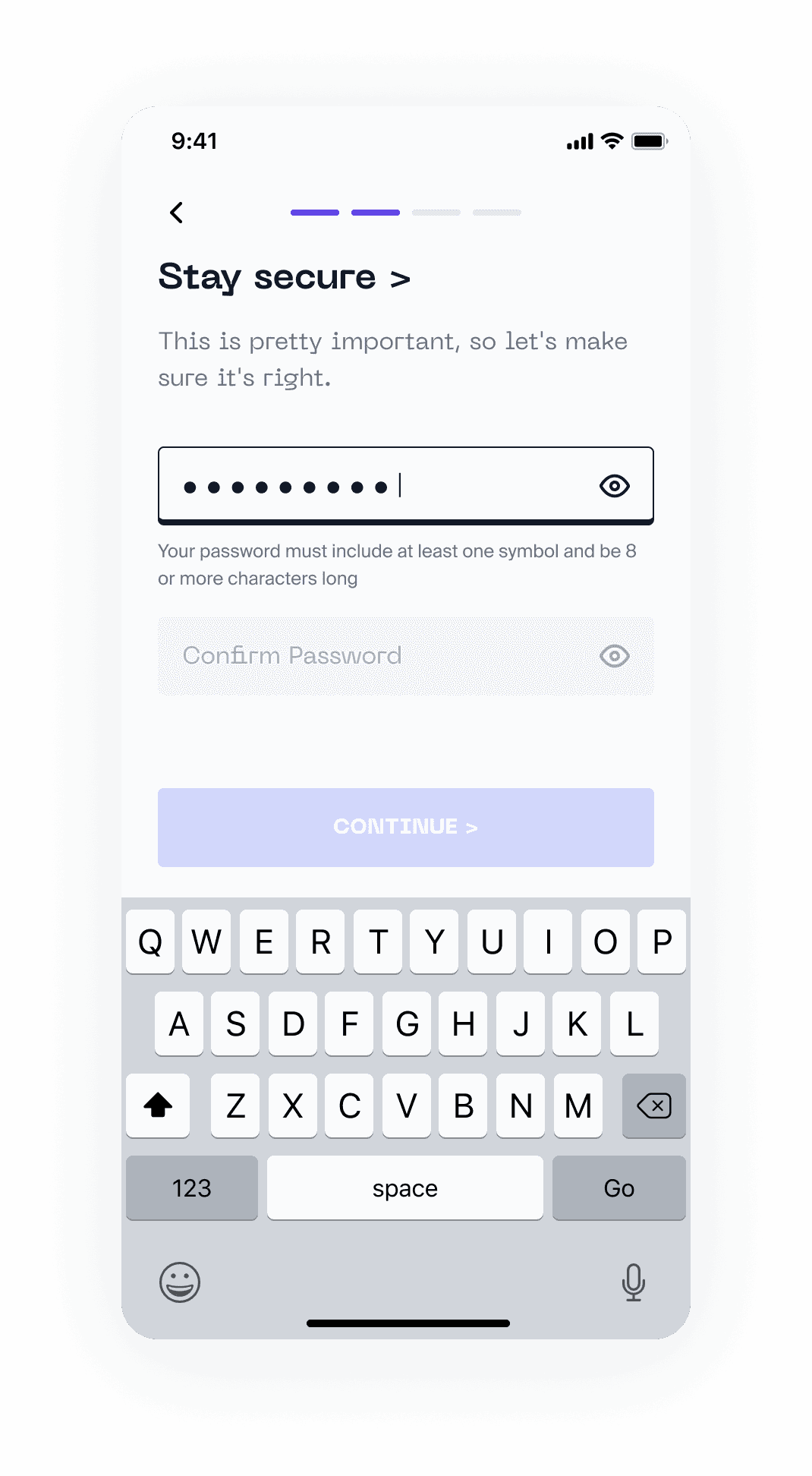
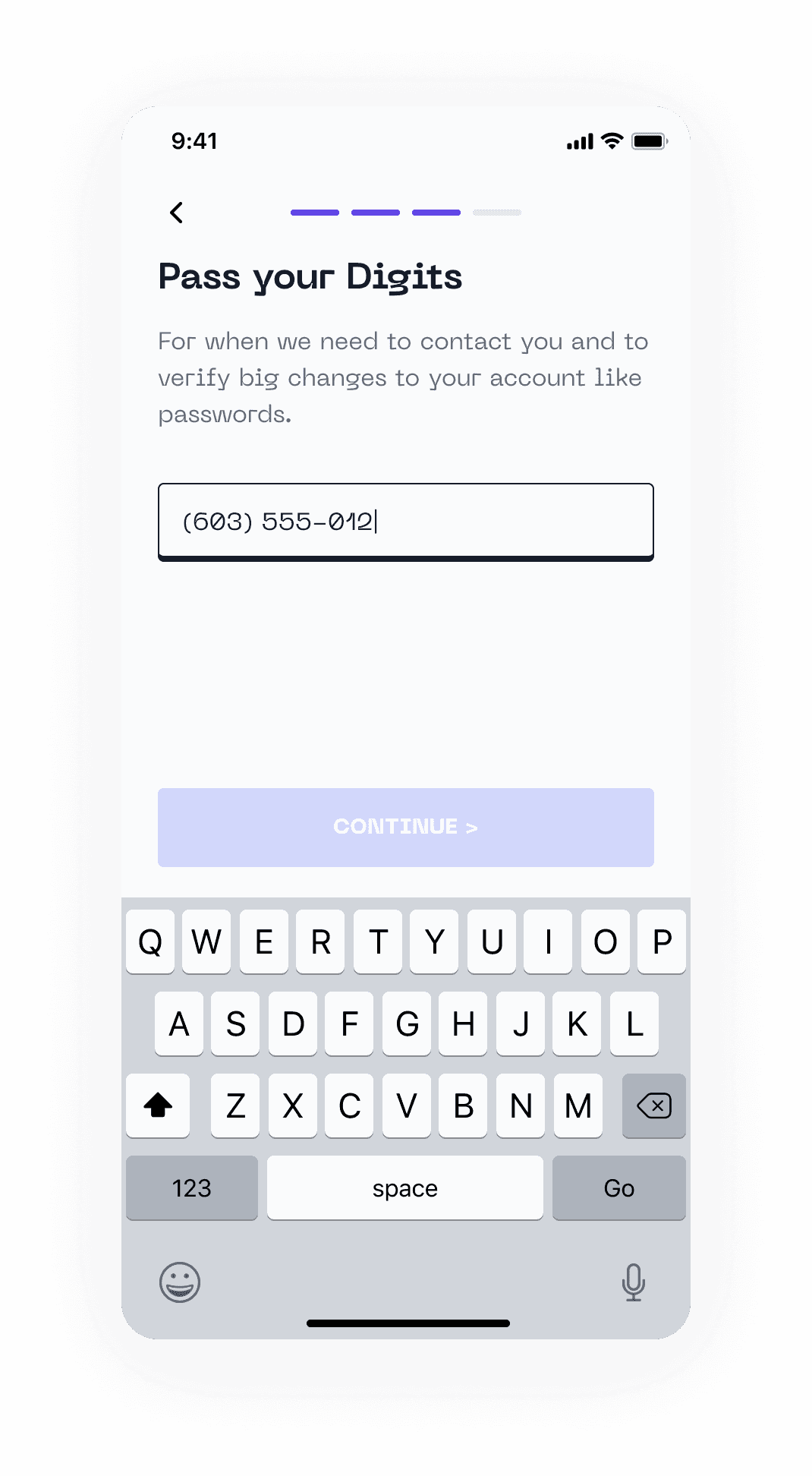
Full Name • Password • Mobile (5)
Personal Identifiers • Address (9)
Bank Account • SSN • Gov ID (5)
Location feed • Bank Enablement … (8)
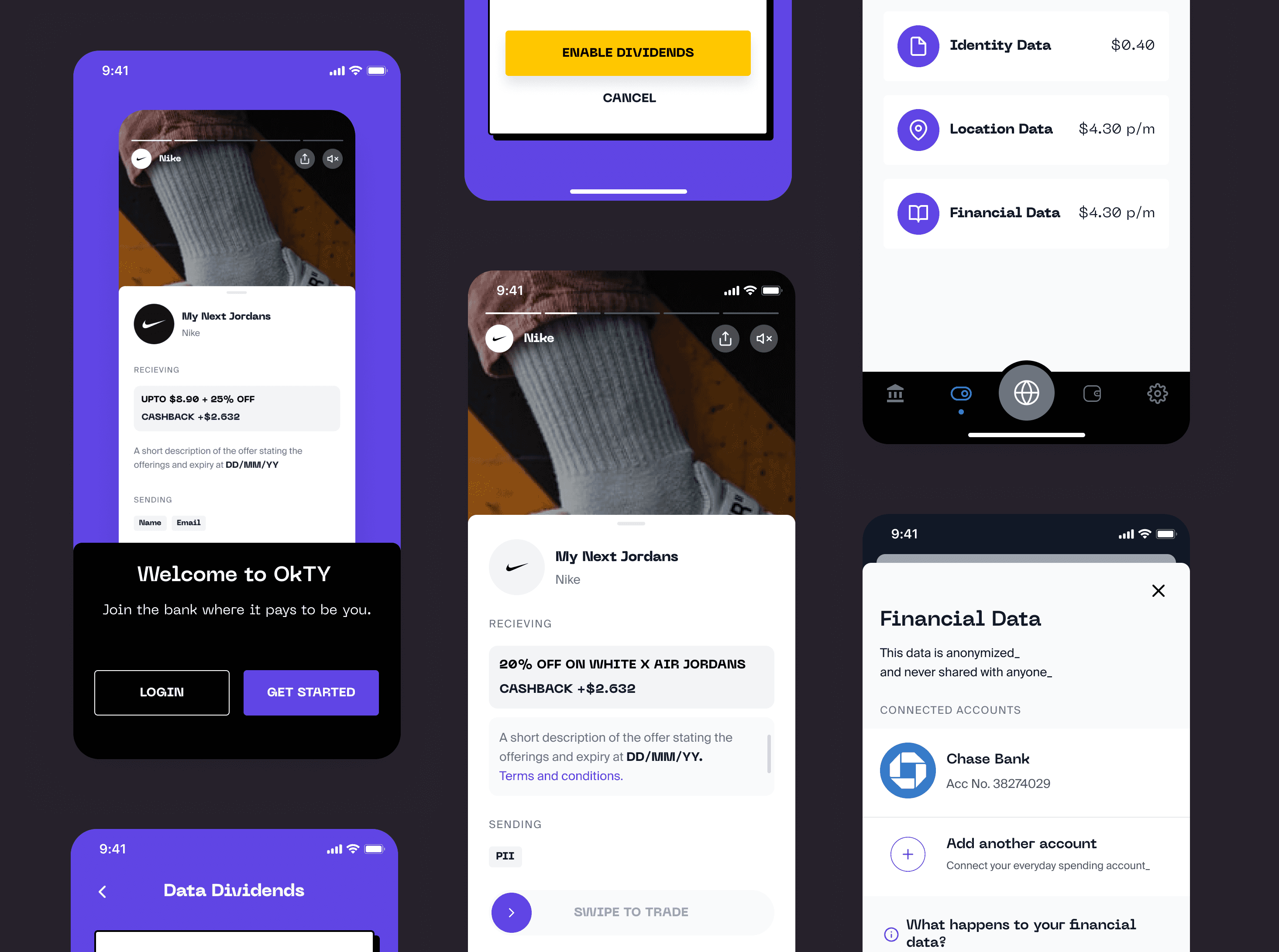
Instead of the front-loading 27 items of information, we split the required sign up steps into 4 distinct segments. These segments were then repositioned around the app as self-prompting barriers to the features they power.
This had two distinct effects.
First, this allows users to explore and familiarise themselves with three value propositions — Data Banking and Trades, Trade Wallet & Coupons at their own pace and interest. User's will spend less time form filling before they can see the unfamiliar value propositions.
New users can get bite sized practical demonstrations of the consumer data space, then at their discretion supply the required information with confidence.
This provides significantly better context as to why OkTY needs such a range of sensitive information. All the while being inside the app significantly earlier in the experience.
This helps demonstrate the company's value of transparency, control, and straightforwardness.
User Value
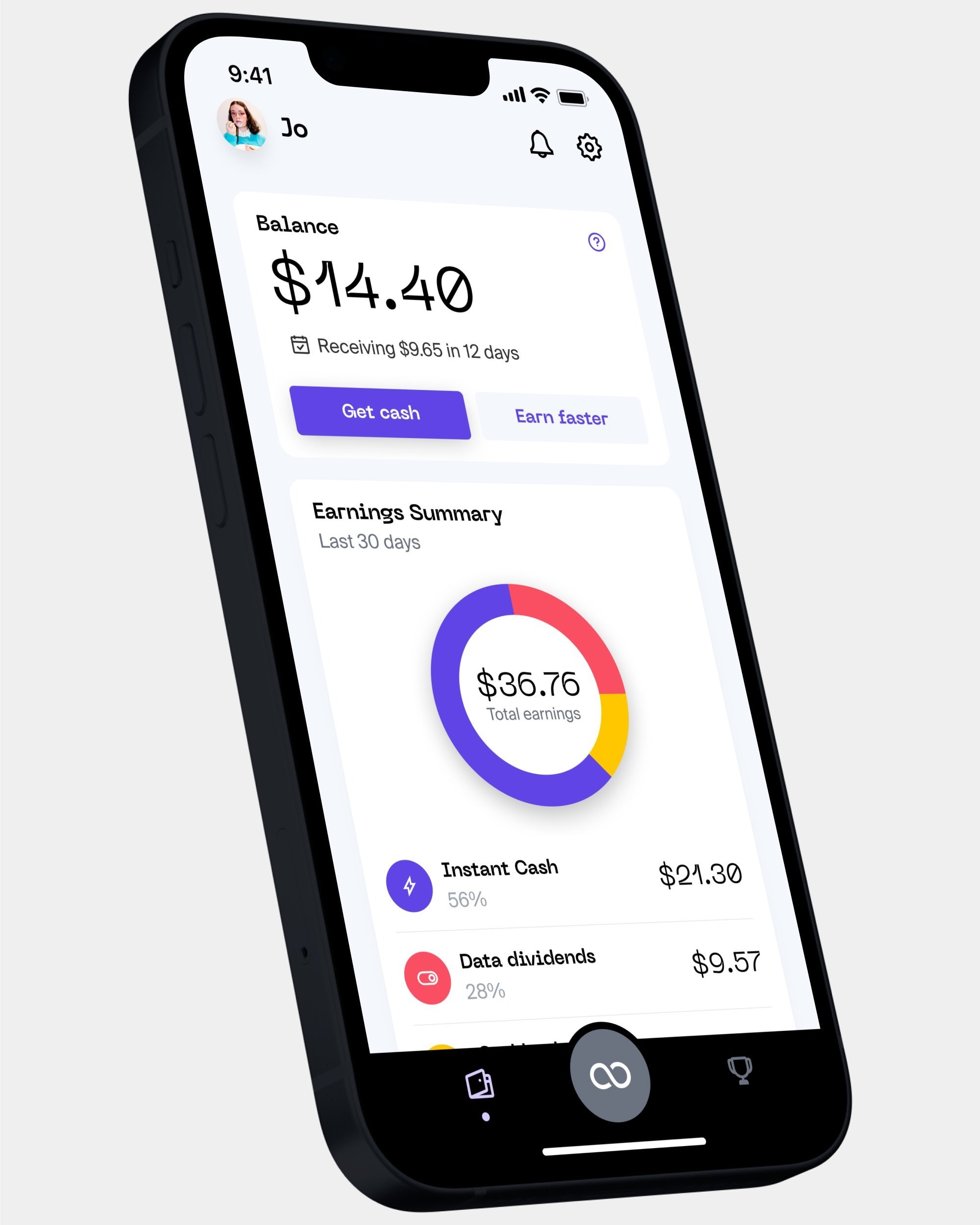
Users can quickly view both trades & data dividends, to confirm the unfamiliar value propositions.
Practical context is provided as to how this data is being used, and why. For example an SSN to create a bank account, allowing users to withdraw the cash they earned.
Users that only care about either trades or data banking are unhindered from doing so, and can easily opt-in later.
Business Value
Drastically higher rates of completed account creation, better retention & the ability to resume onboarding.
Allows for re-approach opportunities if only P1 Onboarding is completed.
More eyes on partner offers earlier which incentivise also completion of onboarding.
Higher rates of data banking enablement, with data asks being contextualised in their own part of the app.
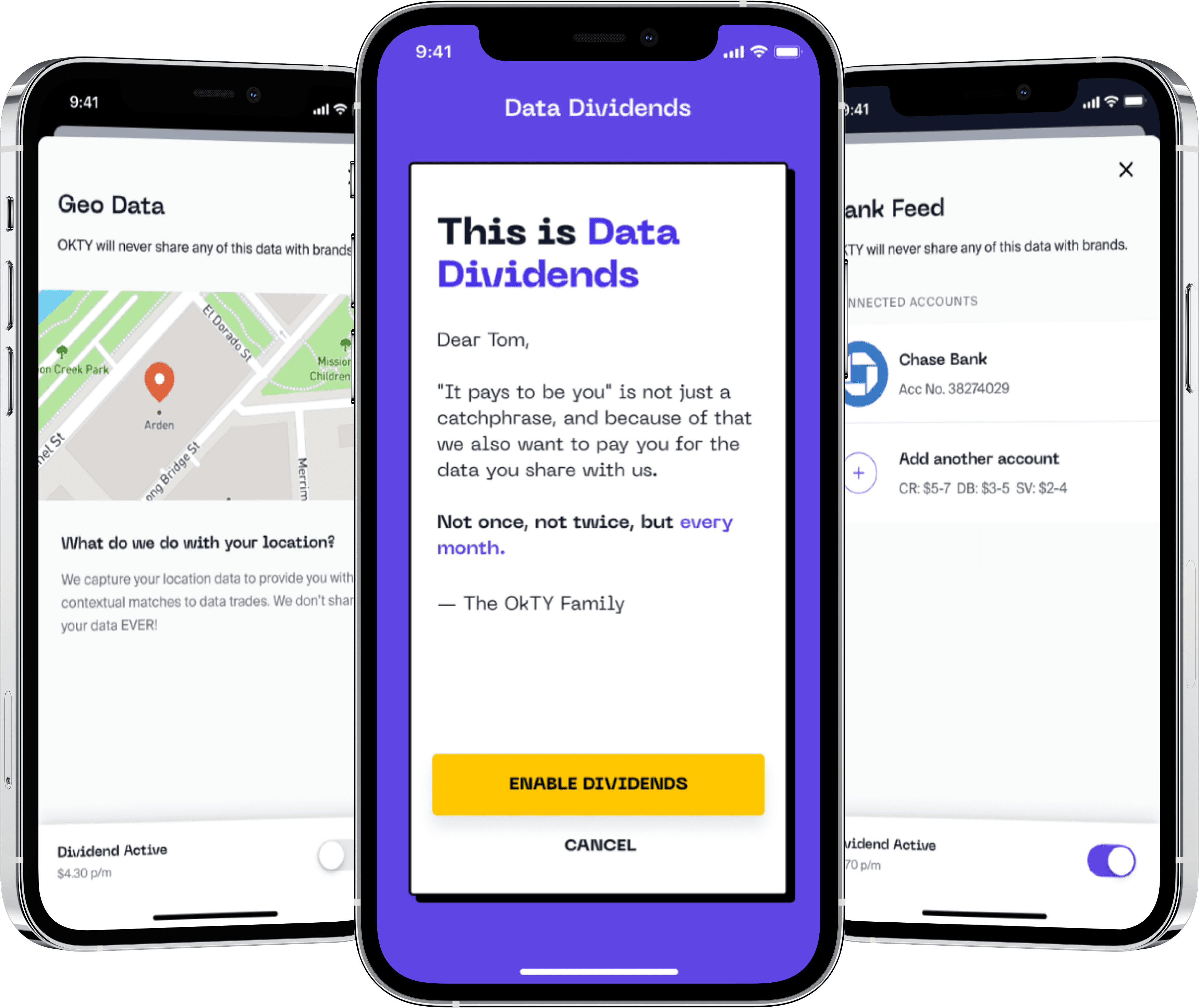
Holding & Trades account
Bank Account • SSN • ID… +13
Trade Profile
Personal Identifiers • Address… +5
Enabling Data Dividends
Location • Sub Goal • Bank feed… +12
Solution Part 2
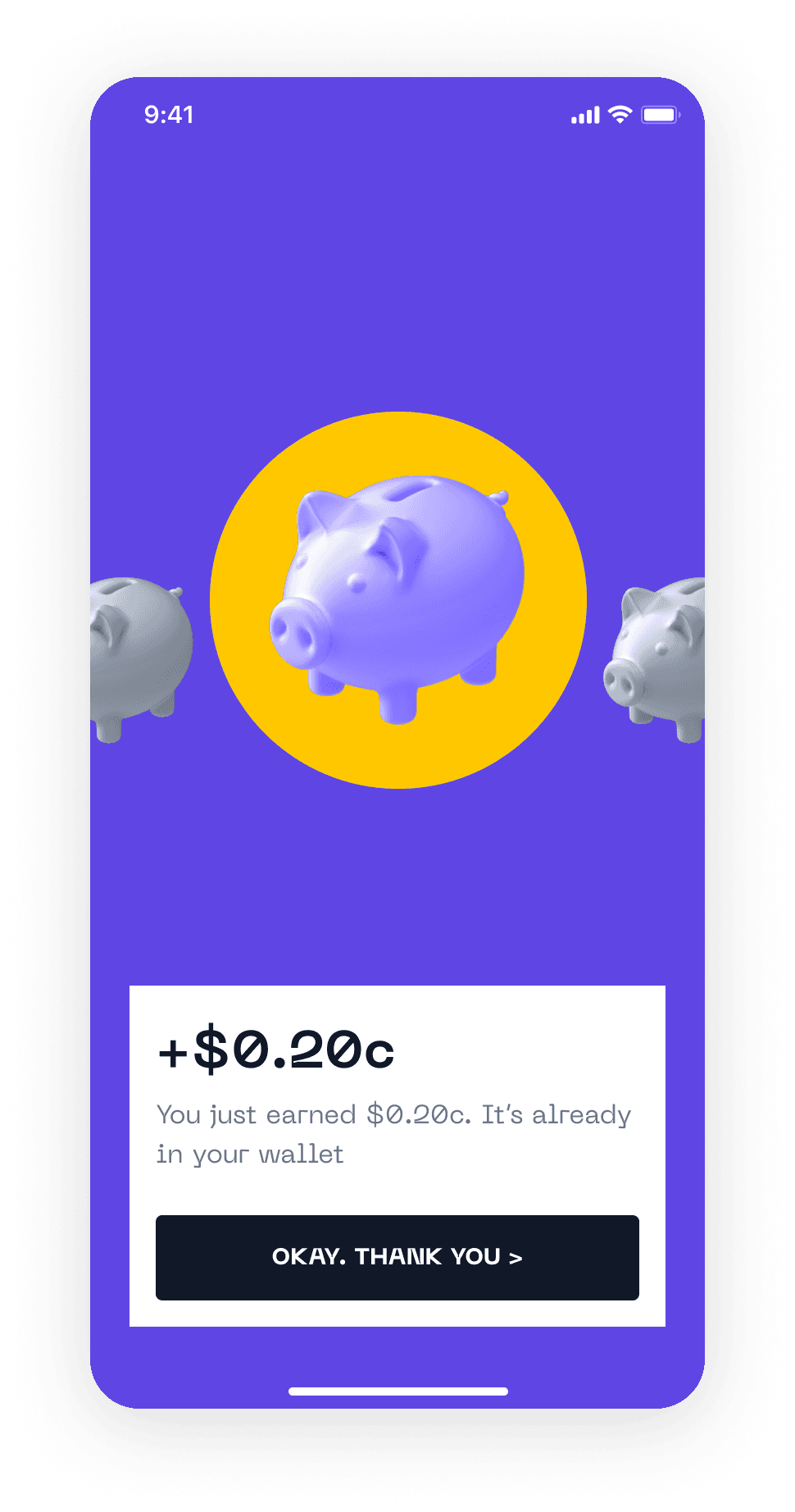
Make the Sign Up,
just as rewarding as using the app.
User Value
User's are met with a unprecedented value during onboarding.
Curiosity and an immediate demonstration of app's philosophy and type of value.
An incentive to continue through onboarding and further take advantage this feature.
Business Value
OkTY now has the necessary time for users to warm up to this new relationship, alongside a strong reason to set up the bank account side of their app.
This does not cost OkTY anything extra, With OkTY already positioned to give away a subscription's worth every month, the value deposited into the user's account from sign up, simply comes from the first month's data dividend.
Shipped solutions Part 3
Making Data Trades, feel natural.
Introducing a new behaviour can be quite challenging, and this had two major considerations.
— Exisiting behaviours can mislead users, both in what's taking place & what's expected, and often brings over feelings from those other experiences (good & bad).
— New behaviours, require a lot learning both gesturally and cognitively. This is an already low resource for potential users.
Needless to say the solution had to be a designed balance of the two.
Pain Point Target
The Unfamiliar behaviour
Designing the Trade Listing
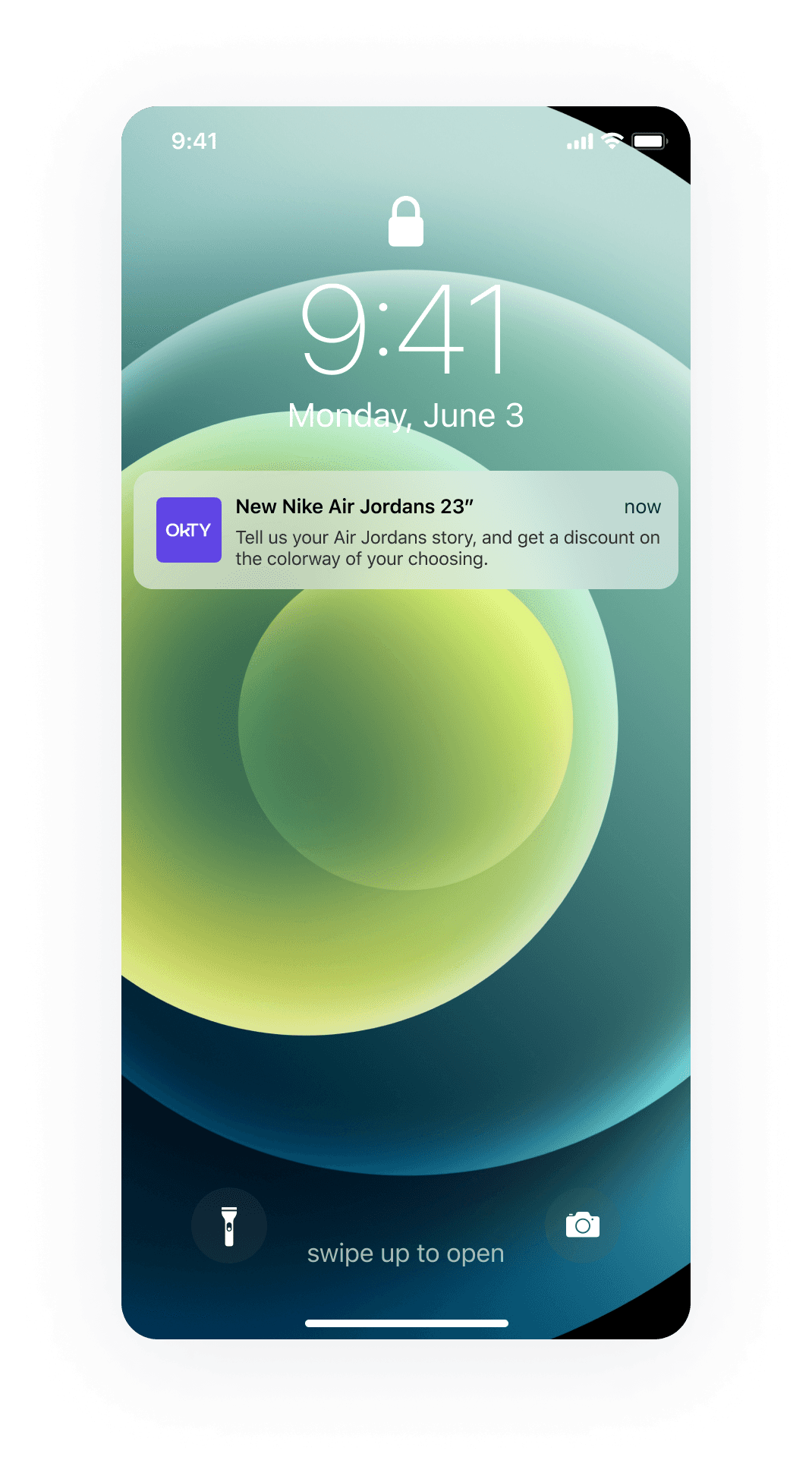
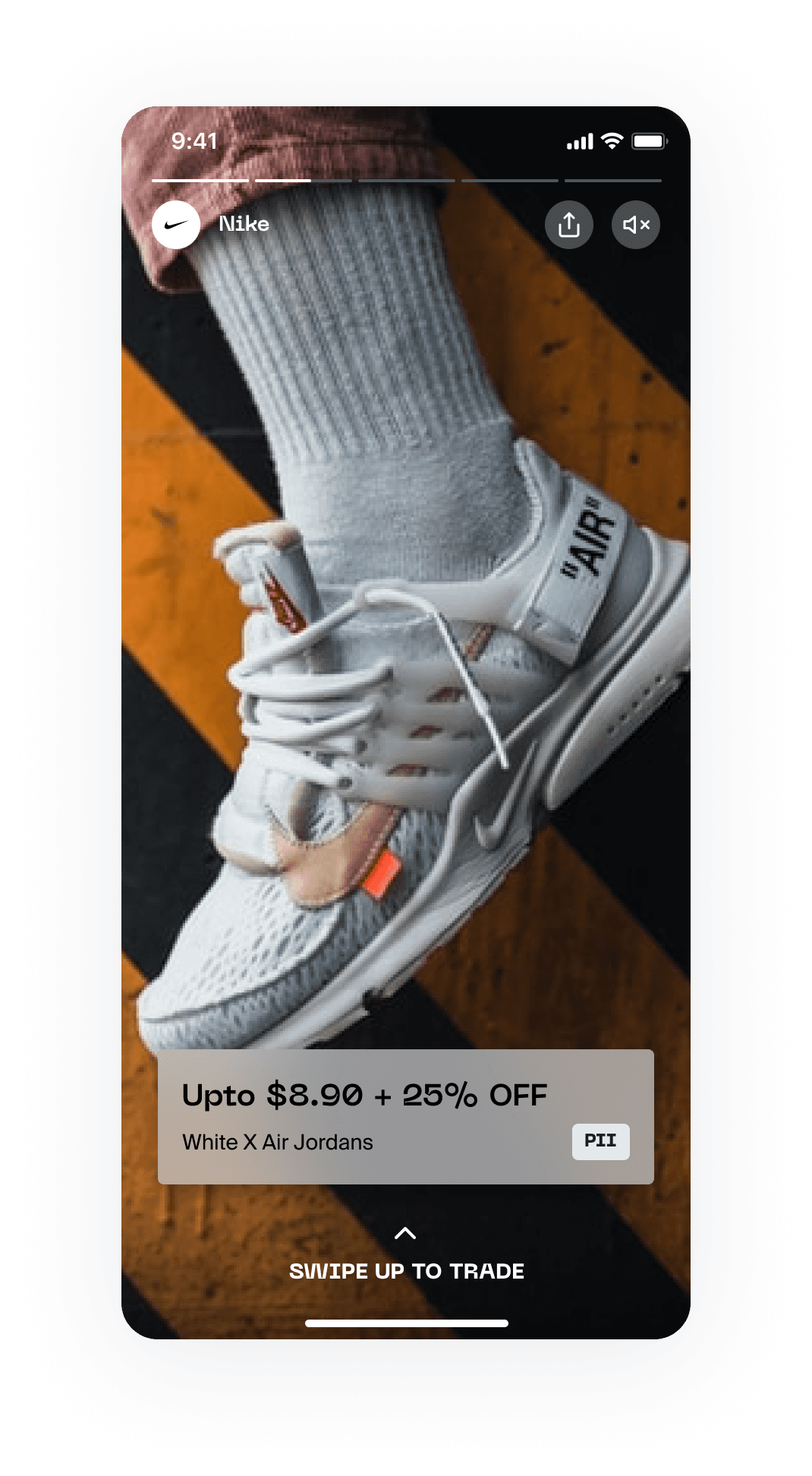
Designing what the Trade Experience.
01
Ease of use
Ease of use for users, but also for the brand's creating their listings. Asset & information required to create trades need to be a balance of easy but compelling.
02
Expectations
Expectations between the users & brands, in what they received & what happens next, i.e a concise around details of trade & value.
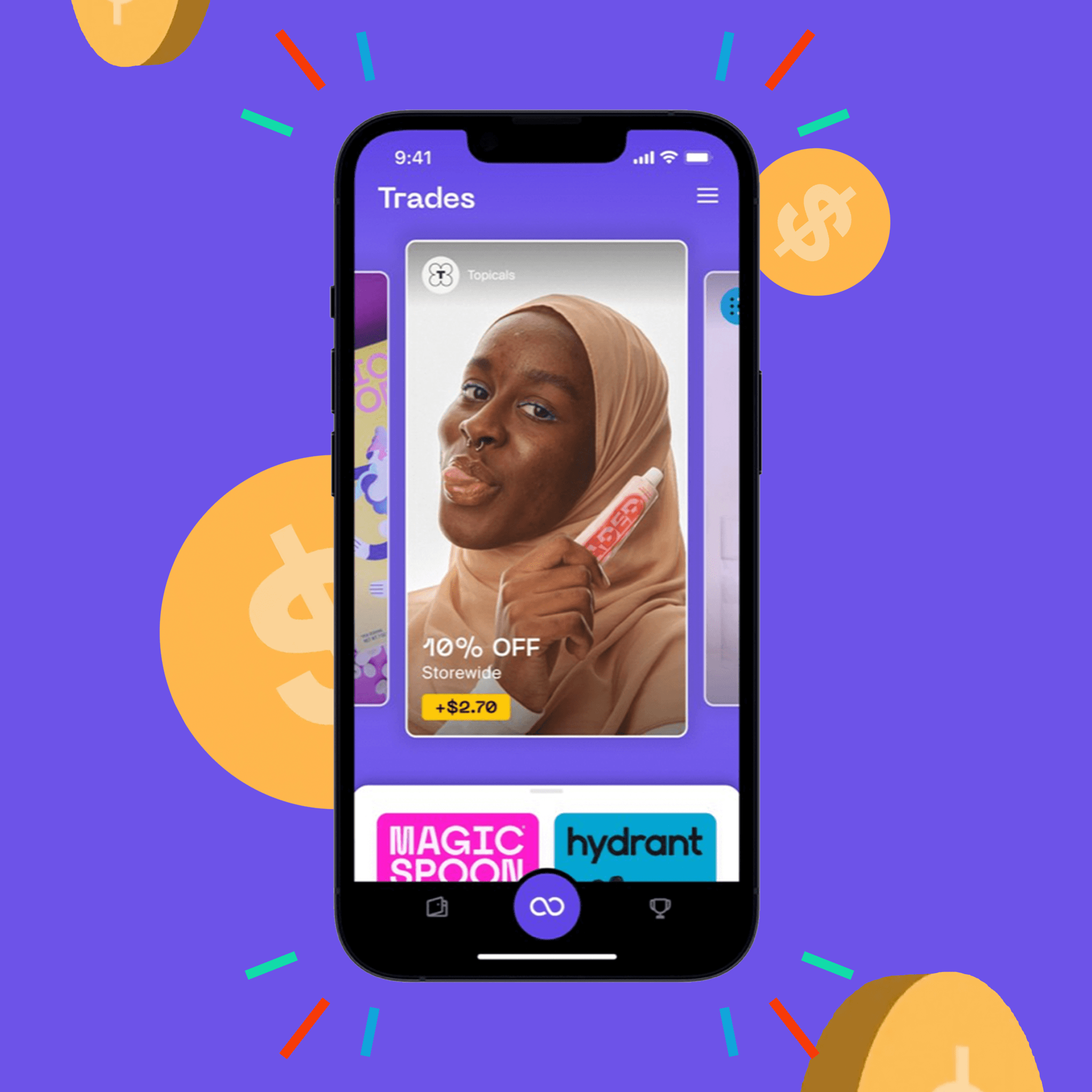
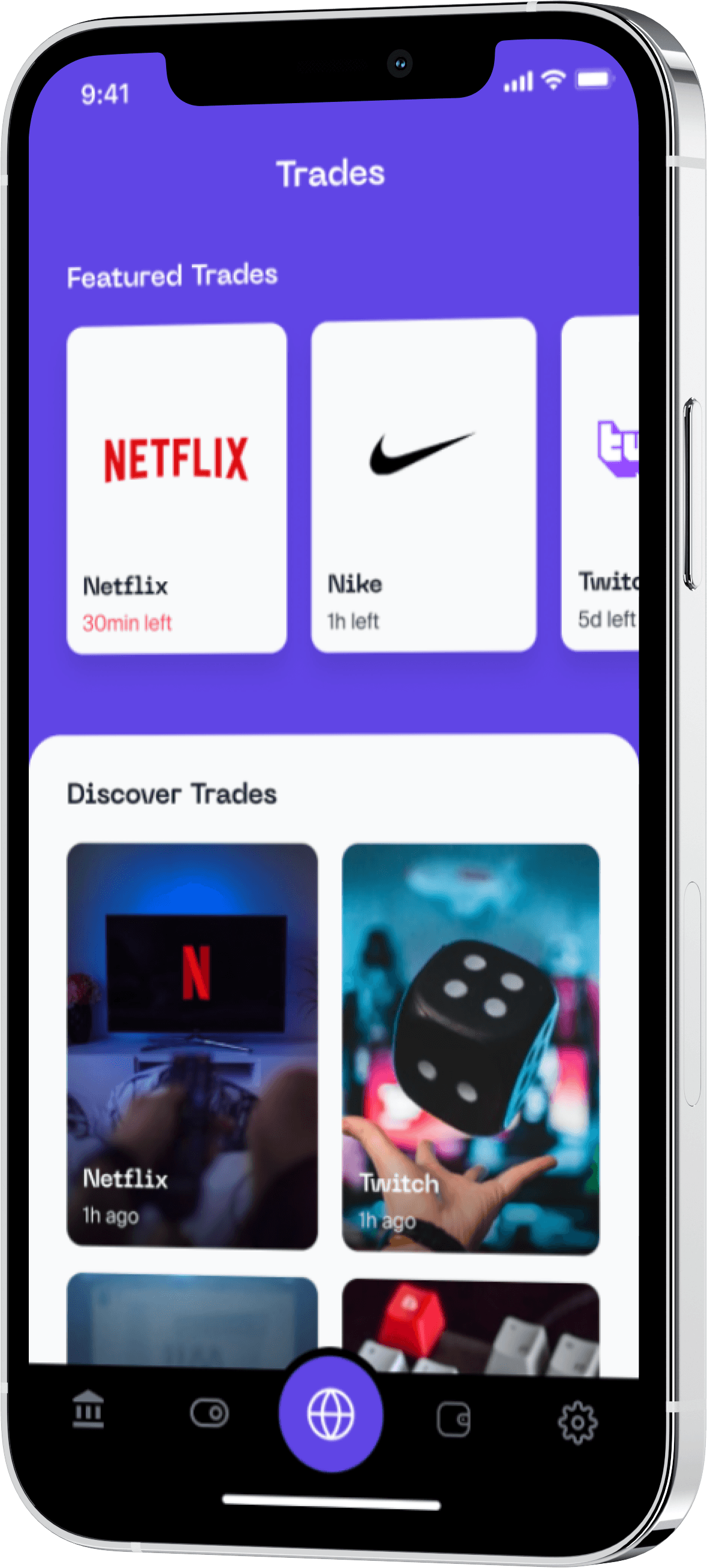
Trade Previews
Due to the volume & demand, previewing trades needed to be concise but effectively communicate mutual points of focus.
Campaign Subject
Trade Value
Data Points
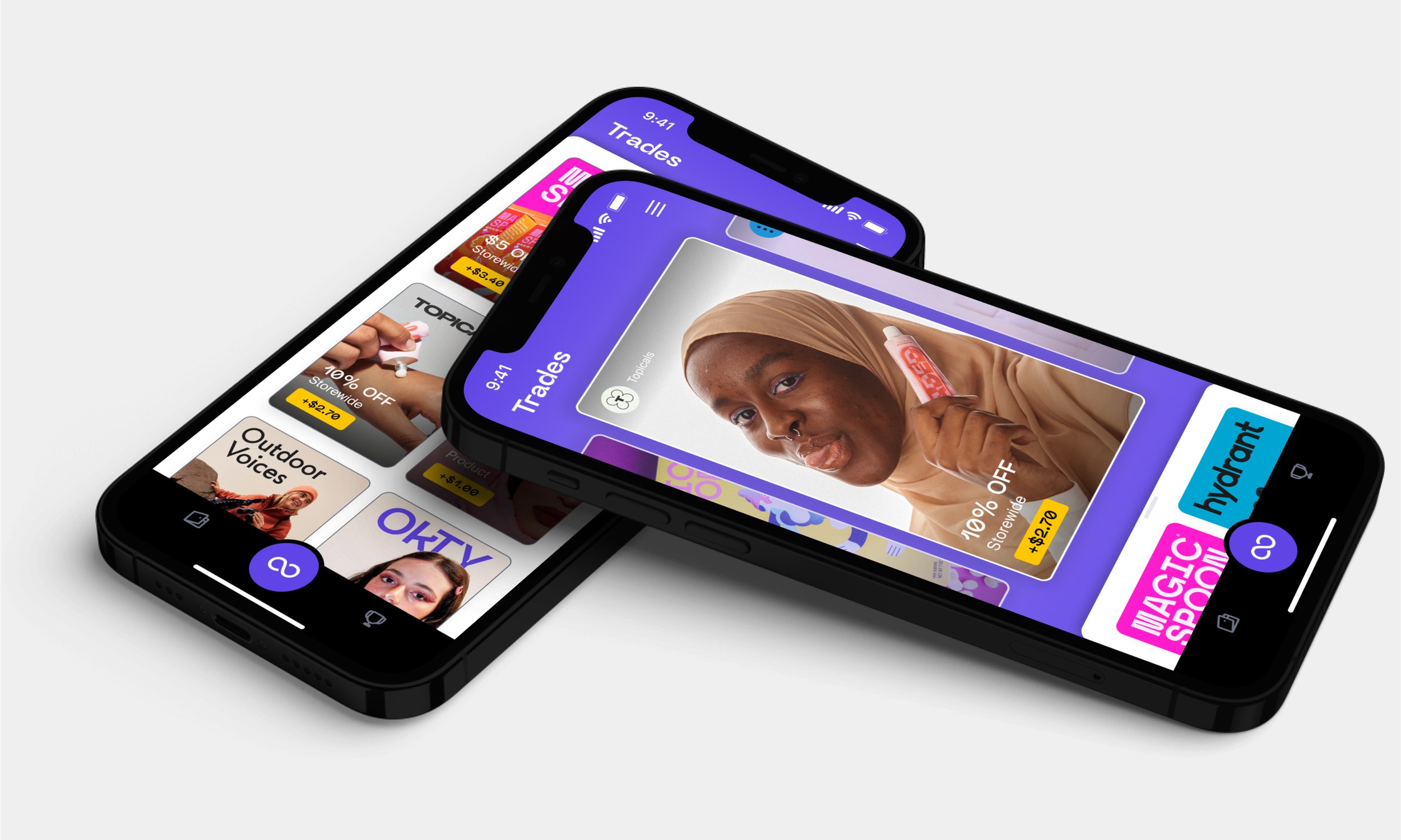
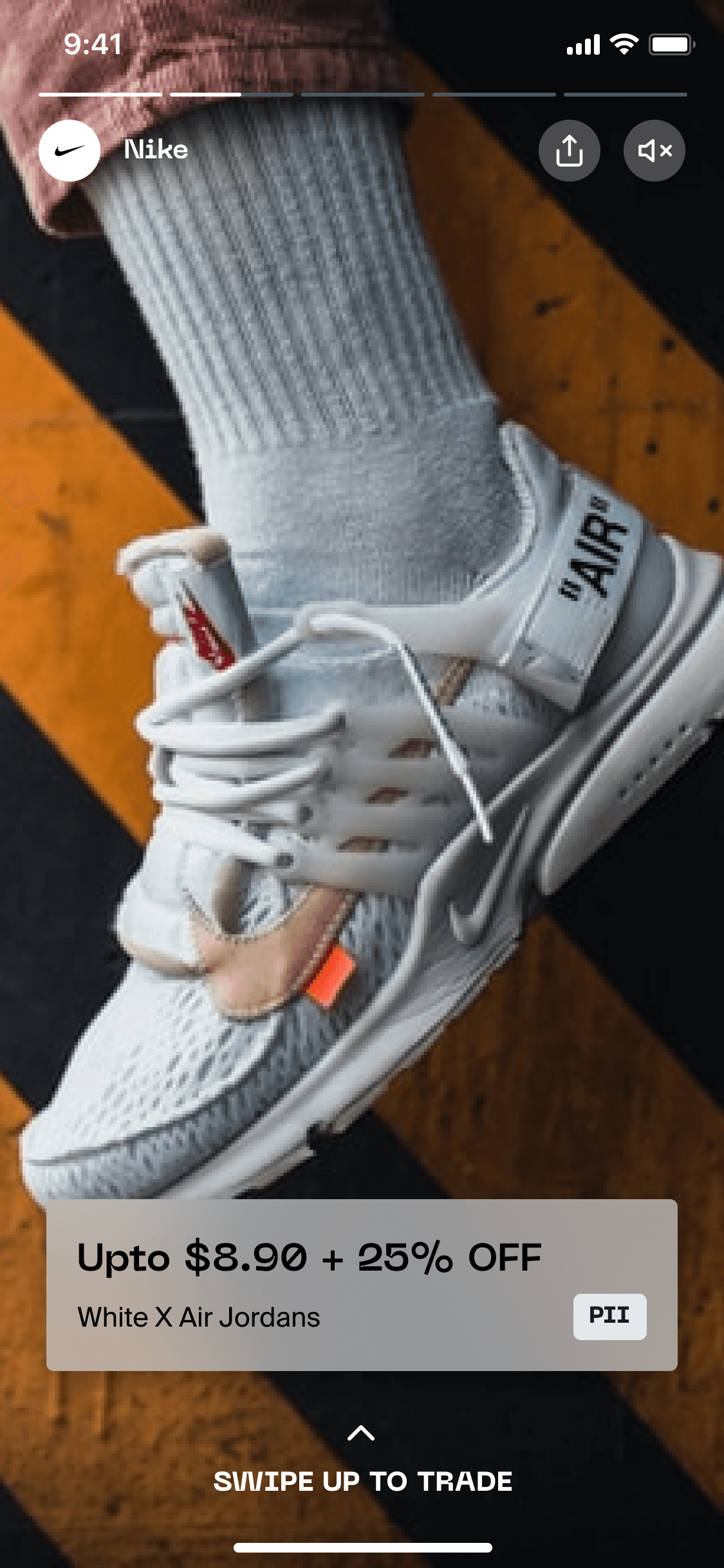
Alongside the traditional carousel galleries, adopting a media focused design in a "stories" experience meant high trade viewership, and flexibility in media selection.
To combat the preview's shallow depth we brought out the key user value in each slide. Summarises the main user value types: trade return, discounts & so on.
This format allows users to quickly acclimate to the app, making viewing all the trades of a brand easily experienced in short amount of time.
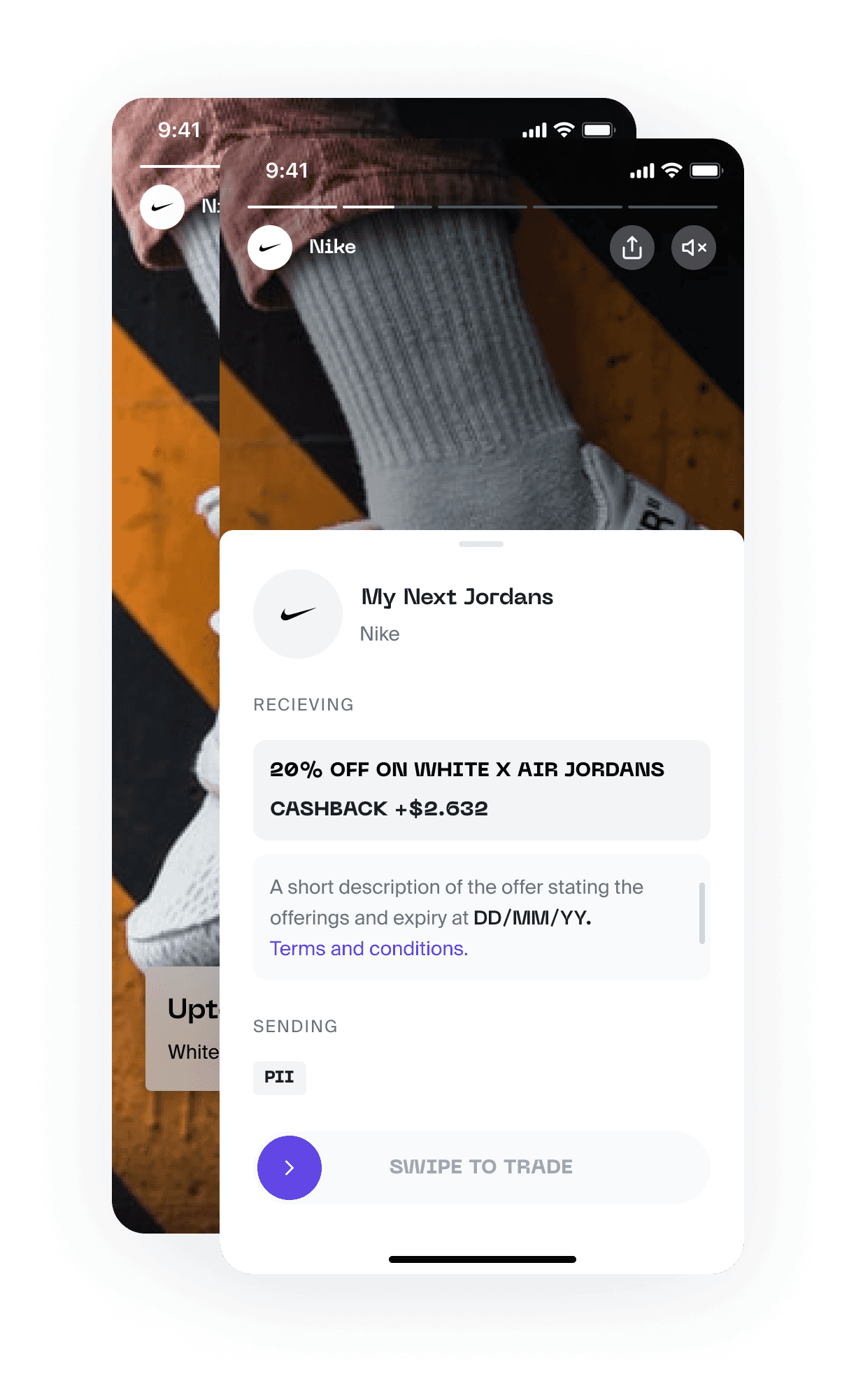
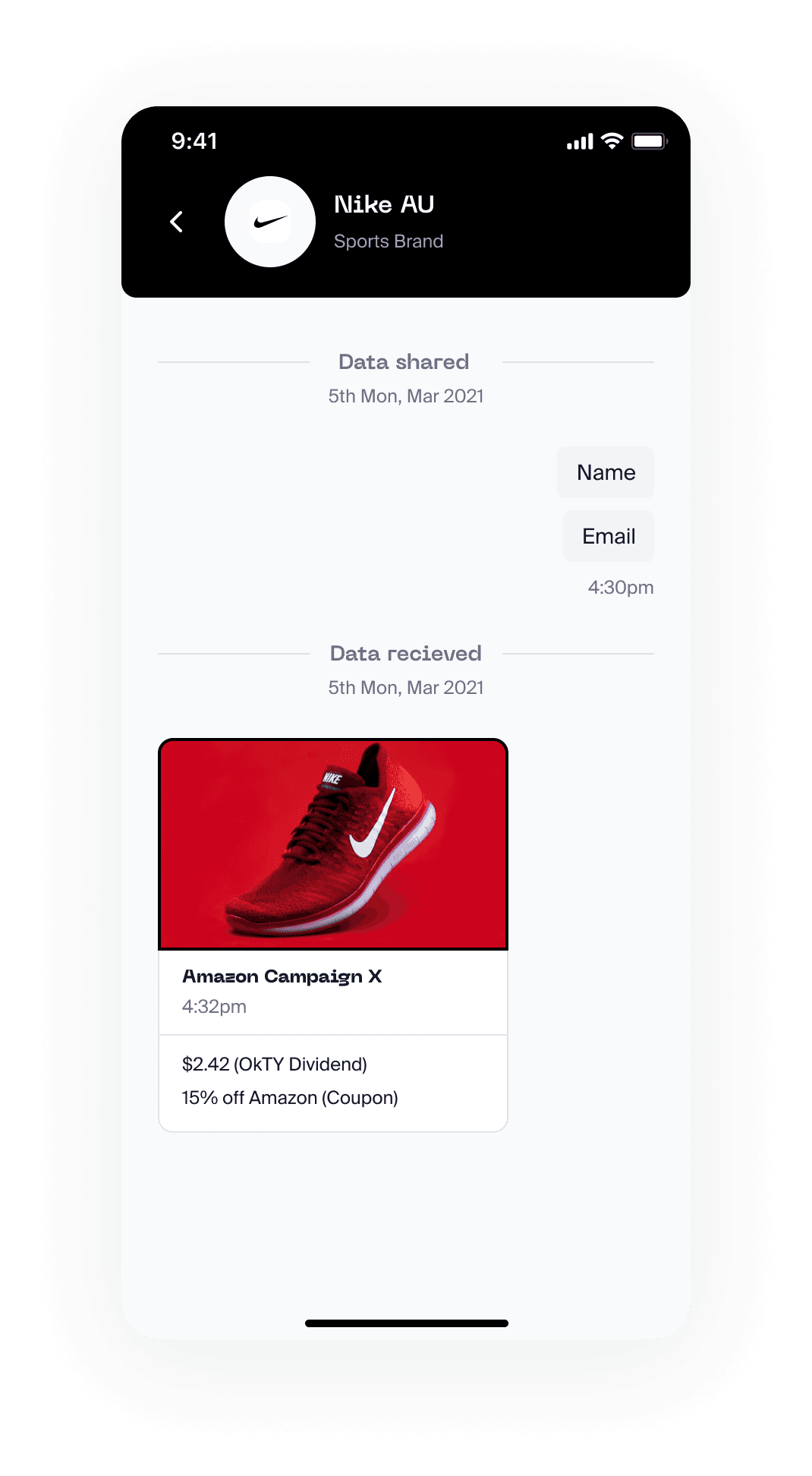
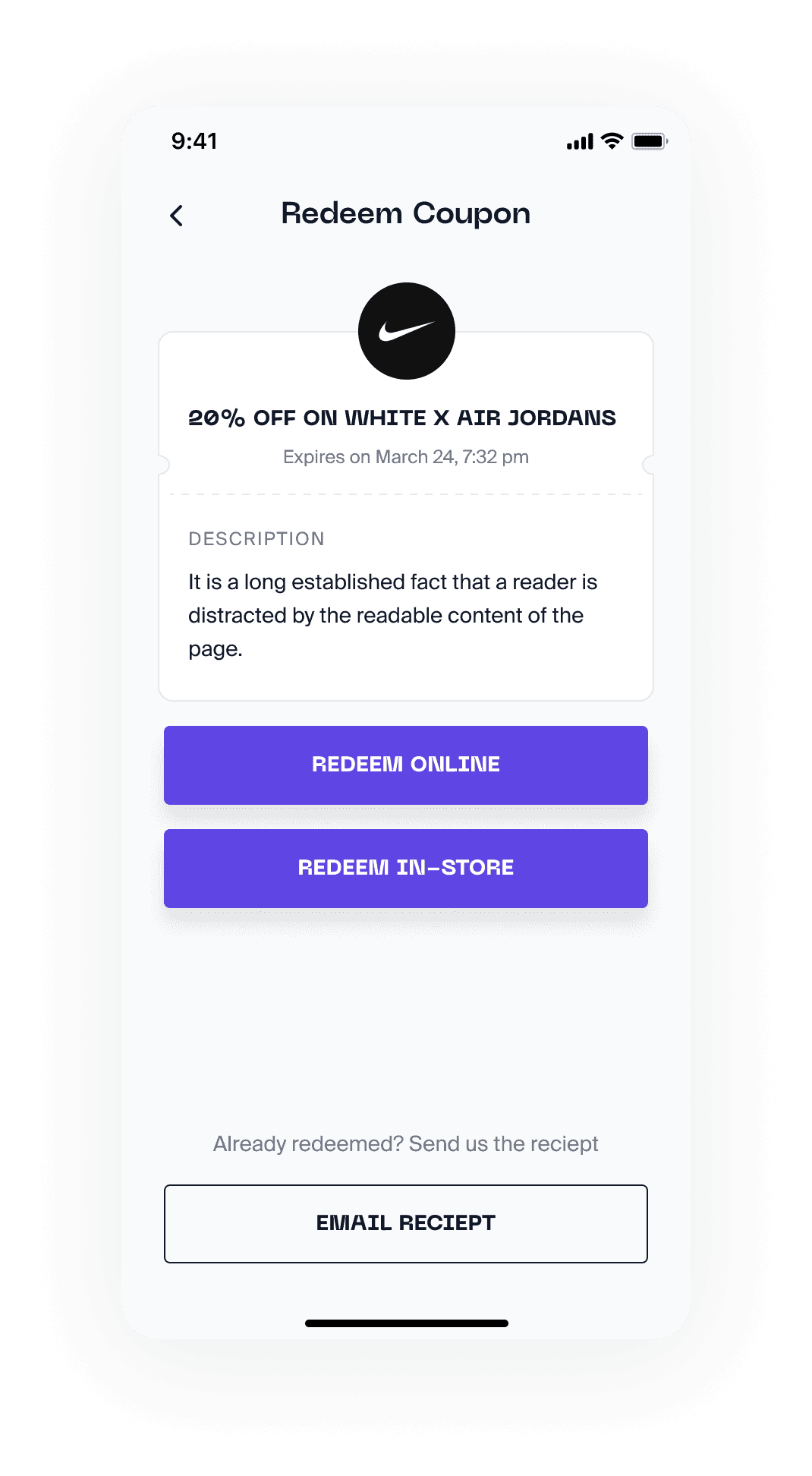
Scannable Trade Details
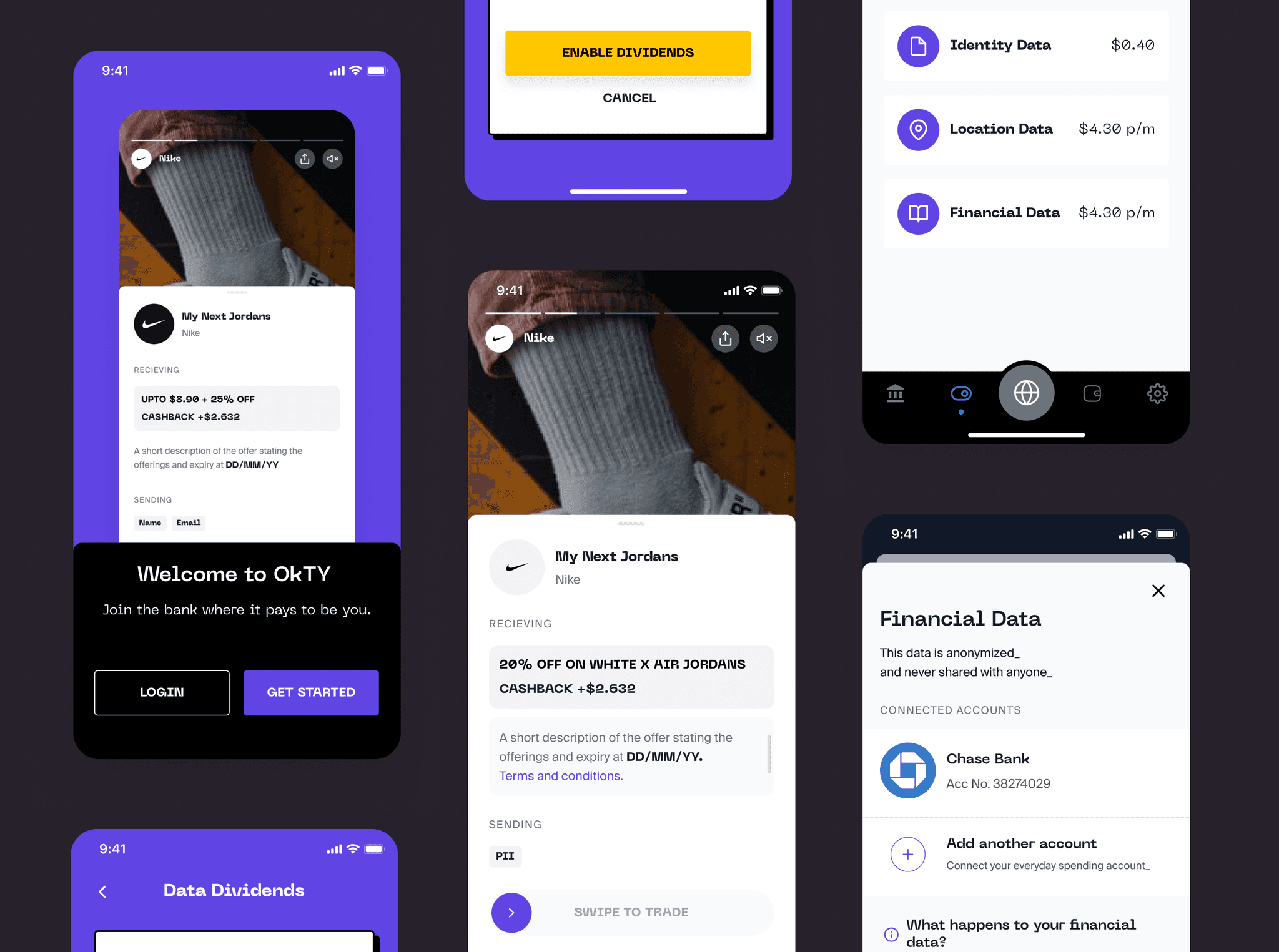
Alongside key info, terms & dates, comprehension of data points were made into distinct components. This alongside skeuomorphic representations of discount & coupon visuals, kept the trade details valuable yet scannable.
An focal point for both us and the client was to keep the overall "trade" experience a short one. Avoiding trades becoming a long survey or multi-document agreement.
User Value
Users can quickly learn the trades experience, and operate all the key functions with distinct default behaviours, allowing more focus to be on the content & trade rewards.
Browsing manually or through the "stories" format is familiar but still distinct to likened contexts.
Consistent & succinct compartmentalising of information and data points means quick but strong comprehension & sense of control.
Business Value
Having an increased viewing rates for trades means both higher engagement for brands but also important
Having 3 technical stages of interaction provides important data for both OkTY and brands to tweak and better understand user behaviour.
Higher user comprehension of trades means more less wasted listings & media churn.
Vendor brands will be able to utilise content from other channels create listings, reducing time spent transposing from other SM or advertising channels.
How it went
Impact
+45%
Completed Onboarding
To see a 20% increase in completed onboarding flows.
1.6 p/w
Trade Engagement
To raise the average weekly data trades per user to 1.4.
72%
Data Banking Rate
Increase enablement of data banking to 60% or higher.
3x
Trade viewership
Amount of trades exposed to users raised drastically.
+1
Shortly after, we were asked to also design the vendor portal!
Update!
It's live on the US appstore!
(Sorry Aussies, I know it sucks for me too.)