Back
Ok Thankyou
Overview
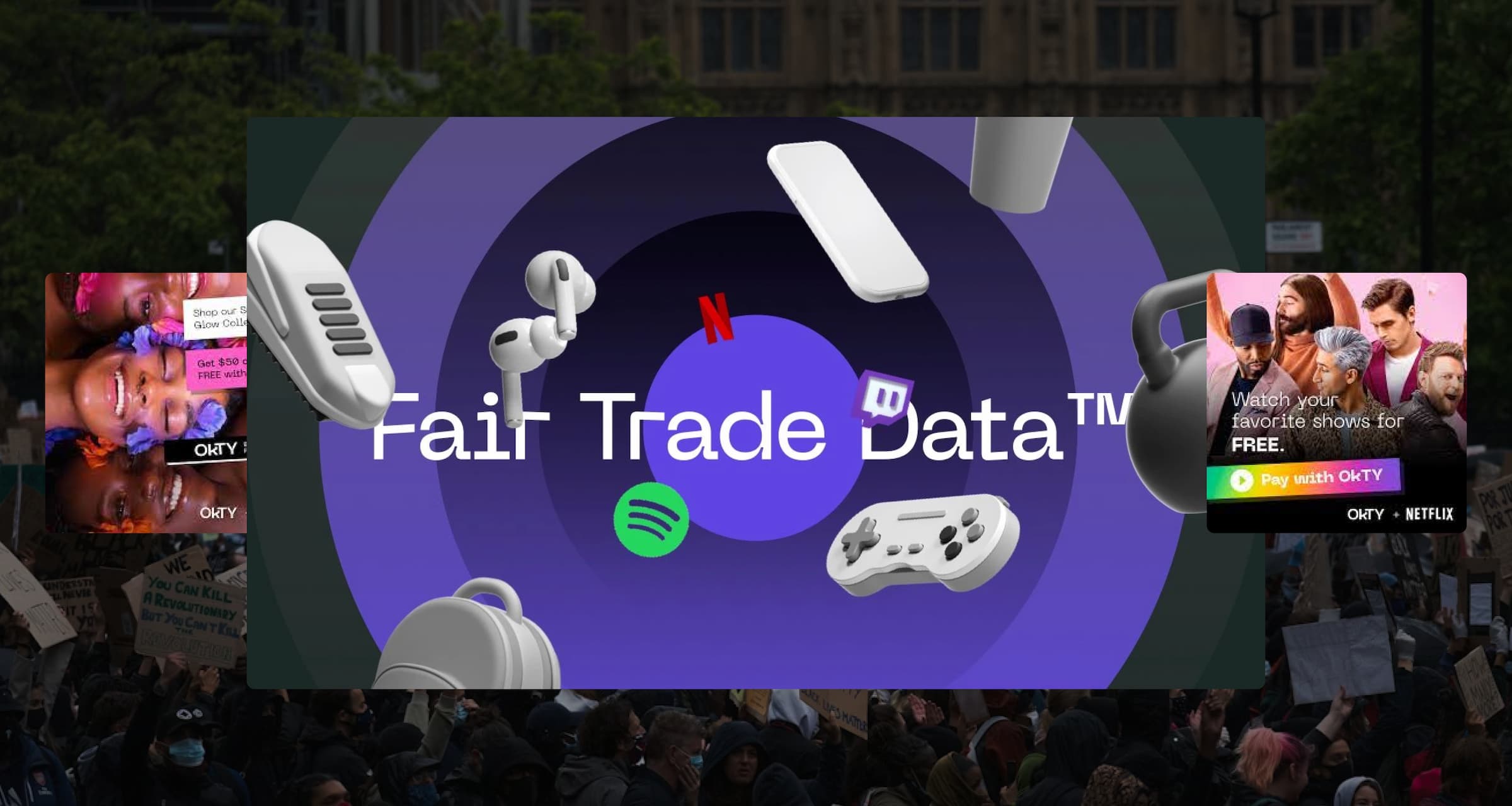
OKTY is a US-based “data bank” that lets people trade their spending and location data for real economic value — cash, rewards, and incentives — instead of having it silently monetised by platforms.
Context
I joined the project as principle Product Designer to work across the consumer app and, later, the vendor platform. Tasked with solving a disruptive introduction to data trading, and an egregiously long and invasive onboarding.
Users were being asked for highly sensitive data (SSN, bank feeds) before they could see any value, in a domain (data trading) they barely understood.


Role
Defined UX direction and interface refinement:
Product Design on the consumer app; later extended to the vendor platform.
Partnered with clients + legal to balance compliance, feasibility, and experience.
Owned solution framing, flow architecture, interaction patterns, and UX copy across onboarding, first-use, and trade journeys.
Problem
OKTY sat at the intersection of three difficult tensions:
Unfamiliar value proposition
Most users had no mental model for “trading data” or receiving dividends from it. Education was necessary, but lengthy explanation risked bloat and drop-off.
High-friction onboarding
The product front‑loaded ~27 items of sensitive information (identity, bank feeds, financial data) before showing any value. This created anxiety and early attrition.
New behaviour, no patterns
Data trades are neither a shop, nor a form, nor a survey. Borrowing existing patterns too literally risked misleading expectations; inventing entirely new ones risked cognitive overload.
The existing experience was technically correct and legally compliant, but it didn’t help users understand, trust, or stay.
Project Constraints
Deep KYC & banking Requirements
Sensitive data asks were non‑negotiable — only when and how we asked could change.
A 2 Sided Marketplace
The product needed to be legible to both first-time consumers and brands running campaigns.
Information and Instruction
Compliance rules restricted copy and flows around identity verification and payouts.
Disruptive but trustworthy Identity
Visual identity was already in place; the work had to fit within it rather than replace it.
Strategy
I anchored the design work around three principles:
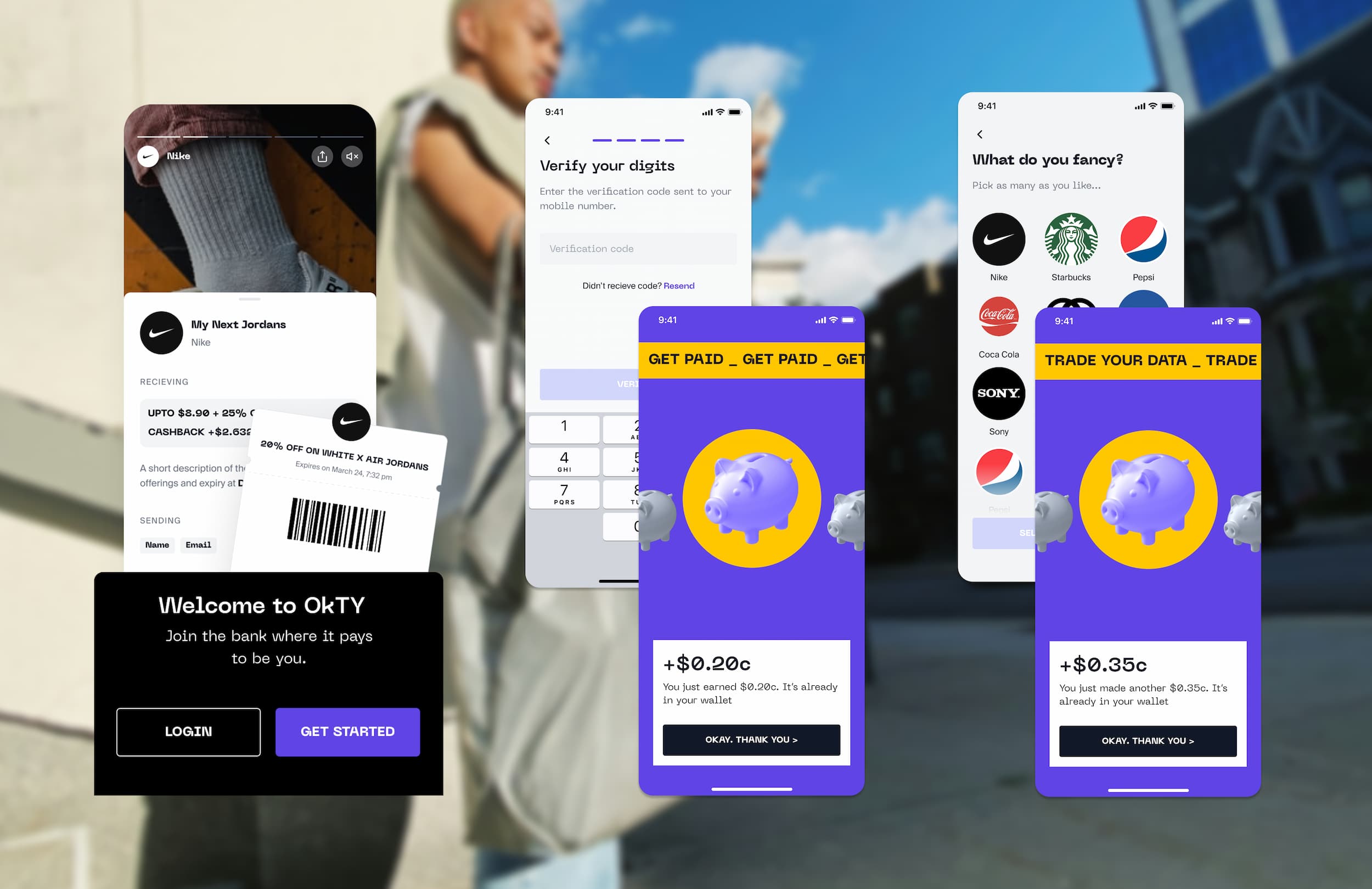
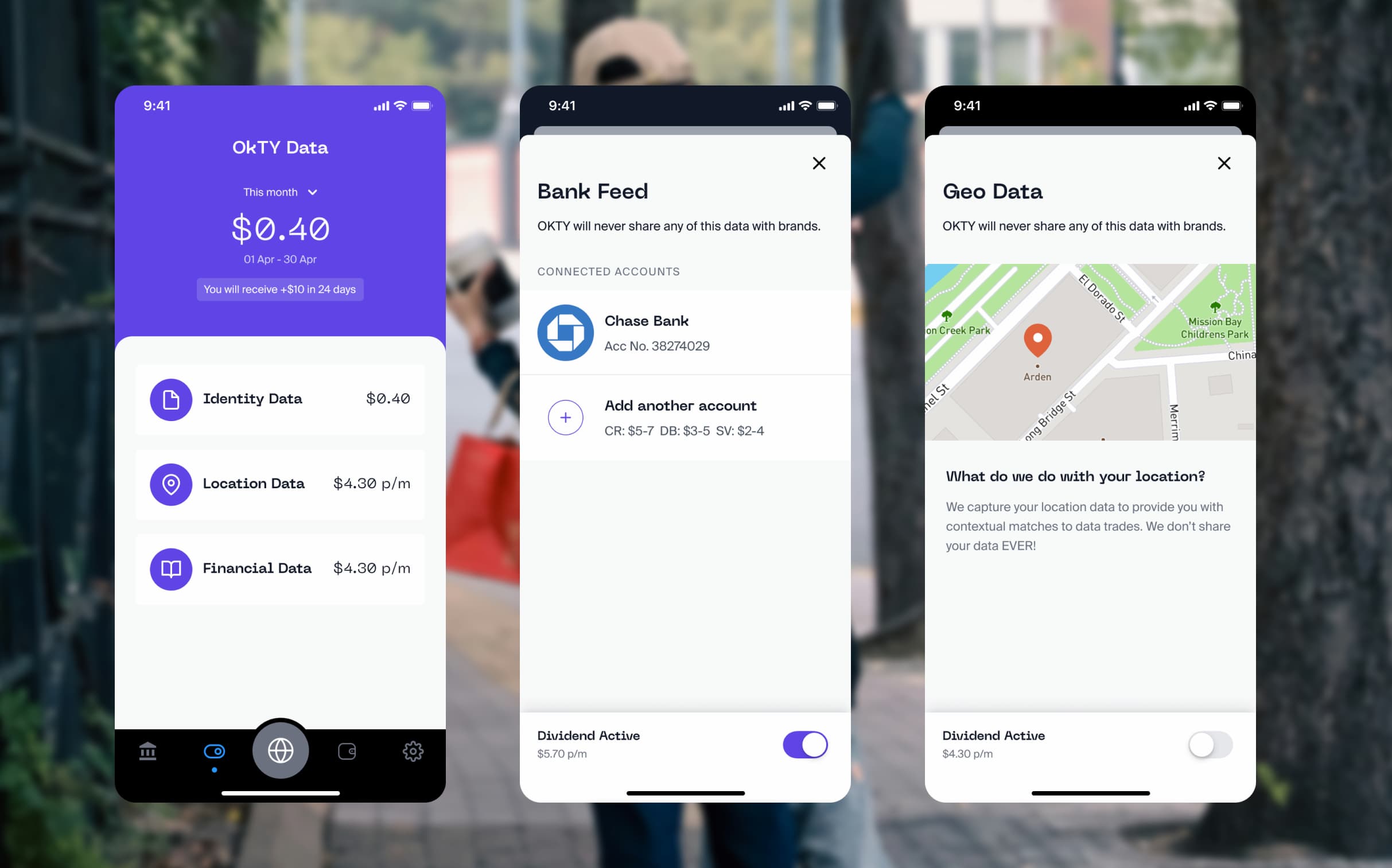
Trust through sequencing, not just messaging — Reduce initial commitments and move sensitive asks closer to moments of clear value.
Time-to-value as a first-class metric — Let users experience the core value (data dividends and trades) as early as possible.
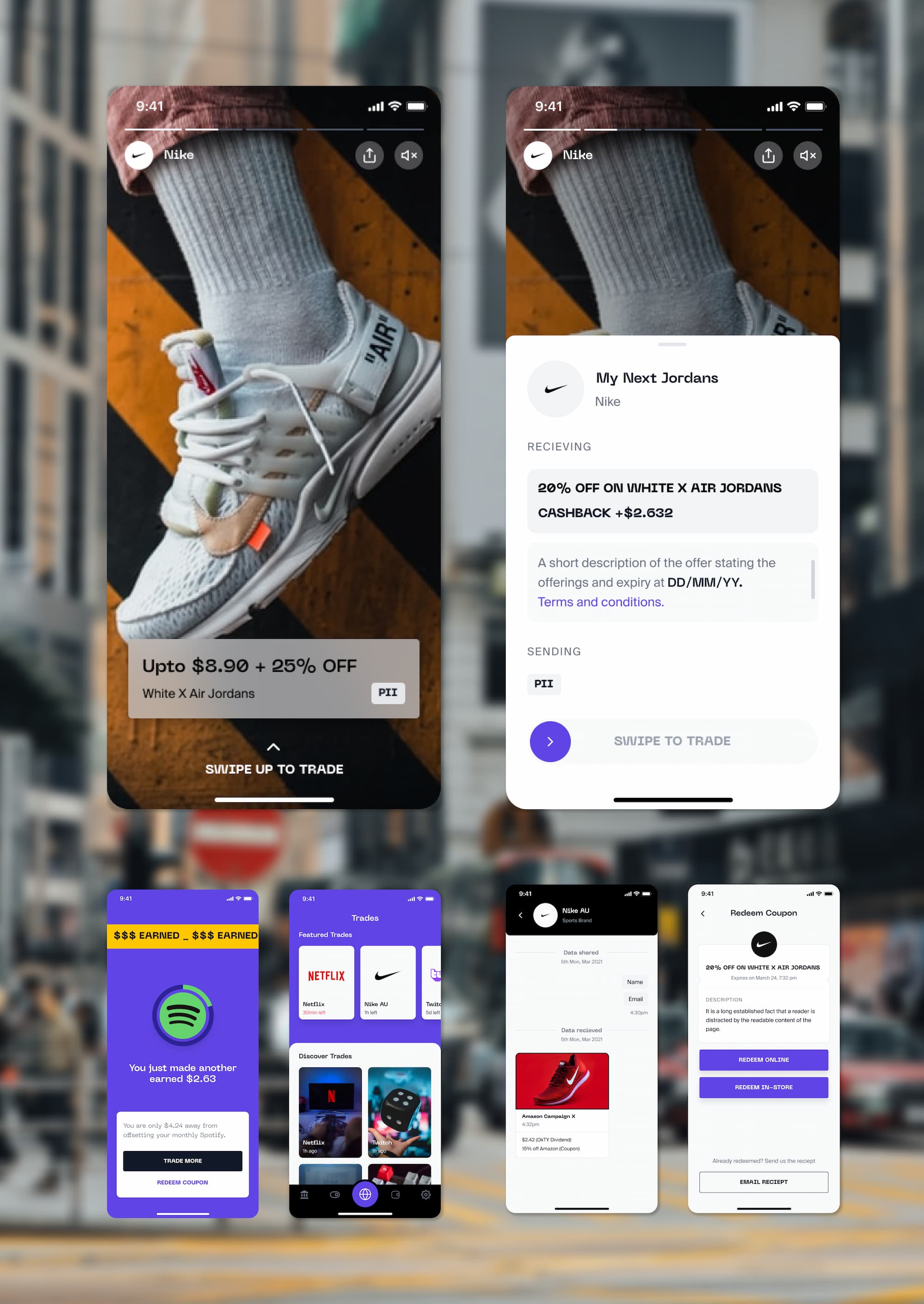
Make new behaviours feel grounded — Use familiar interaction patterns (stories, cards, skeuomorphic rewards) while keeping the underlying transaction honest and clear.
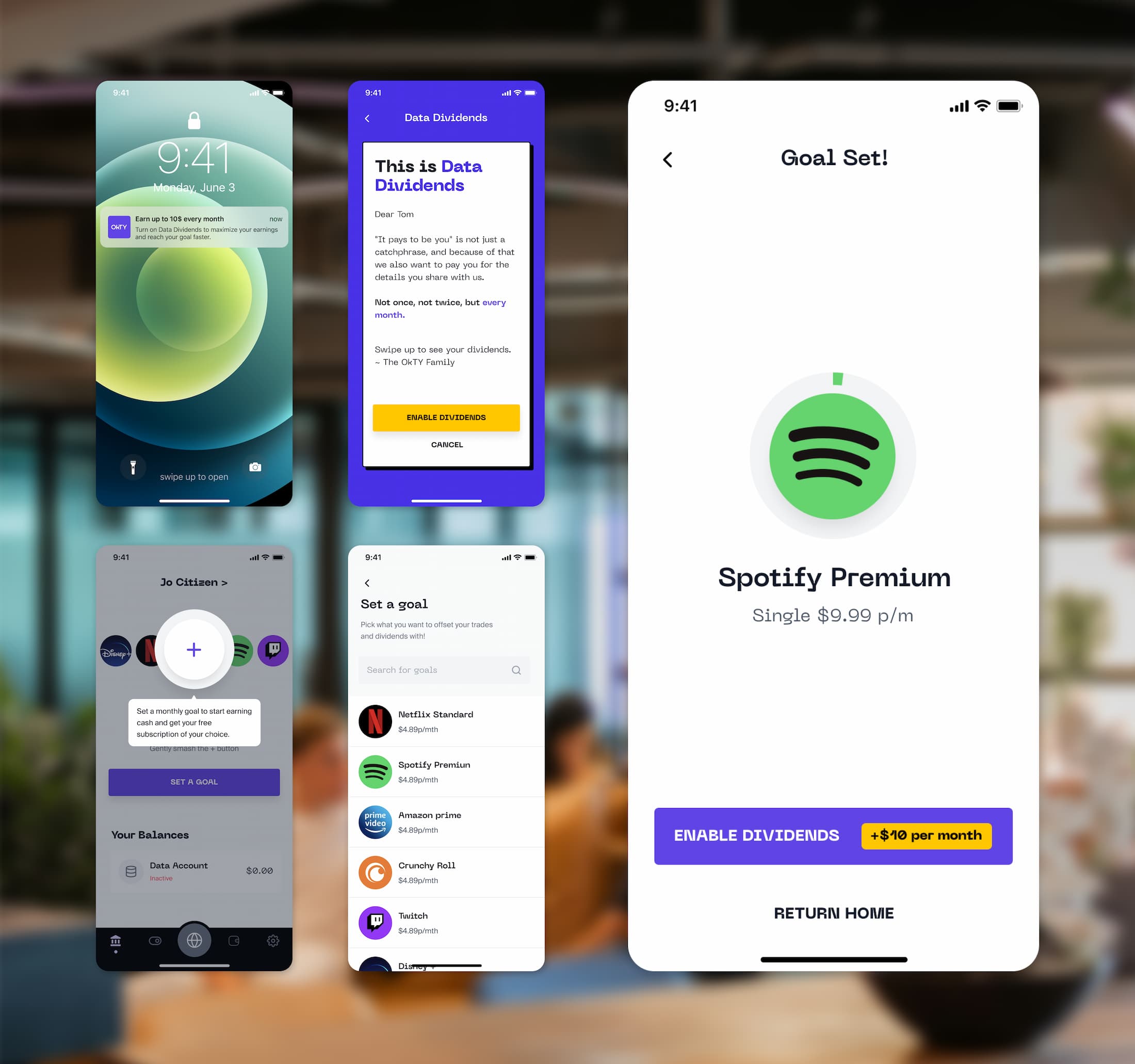
Interventions
Outcome
What began as “fix a long onboarding” evolved into defining how users first experience the idea that their data is an asset — and designing a system where that idea is expressed consistently across flows, behaviours, and business mechanics.
I reframed the work around trust, time-to-value, and behavioural fit. By restructuring onboarding into progressive, value-led steps and redesigning data trades to feel familiar and scannable, we reduced early abandonment and increased the ability for higher completion in key setup flows. Notably also counteracting a key problem in education by taking OKTY’s philosophy — “your data is an asset” — and making it tangible in the product before users even really entered the app.
Impact
(3)
Reach out
Hello@Clems.Studio

Always open to hearing about new orgs!