Back

Nullify Ai

Overview

DESIGNING FOR TRUST IN AUTOMATED SECURITY.

DESIGNING FOR TRUST IN AUTOMATED SECURITY.

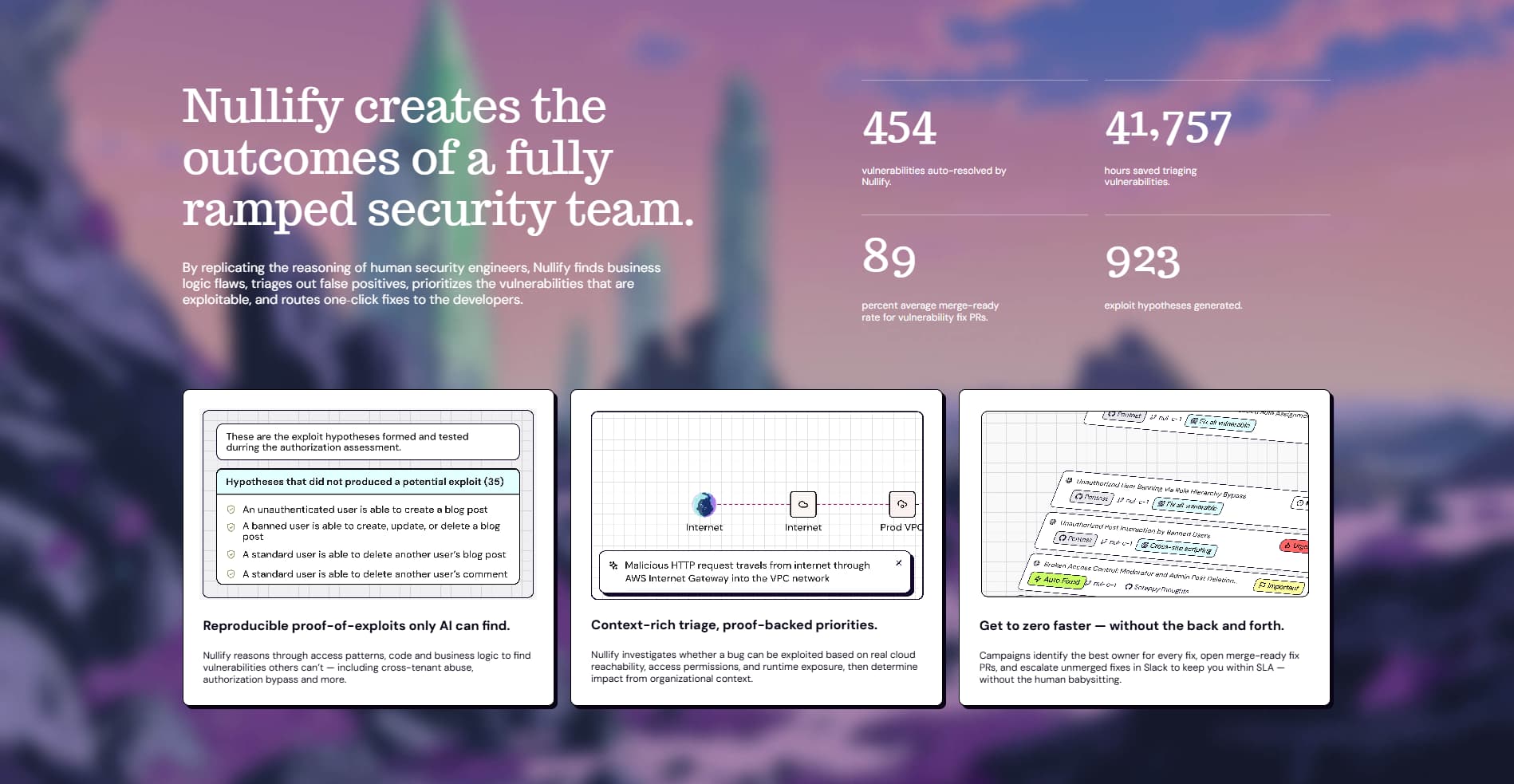
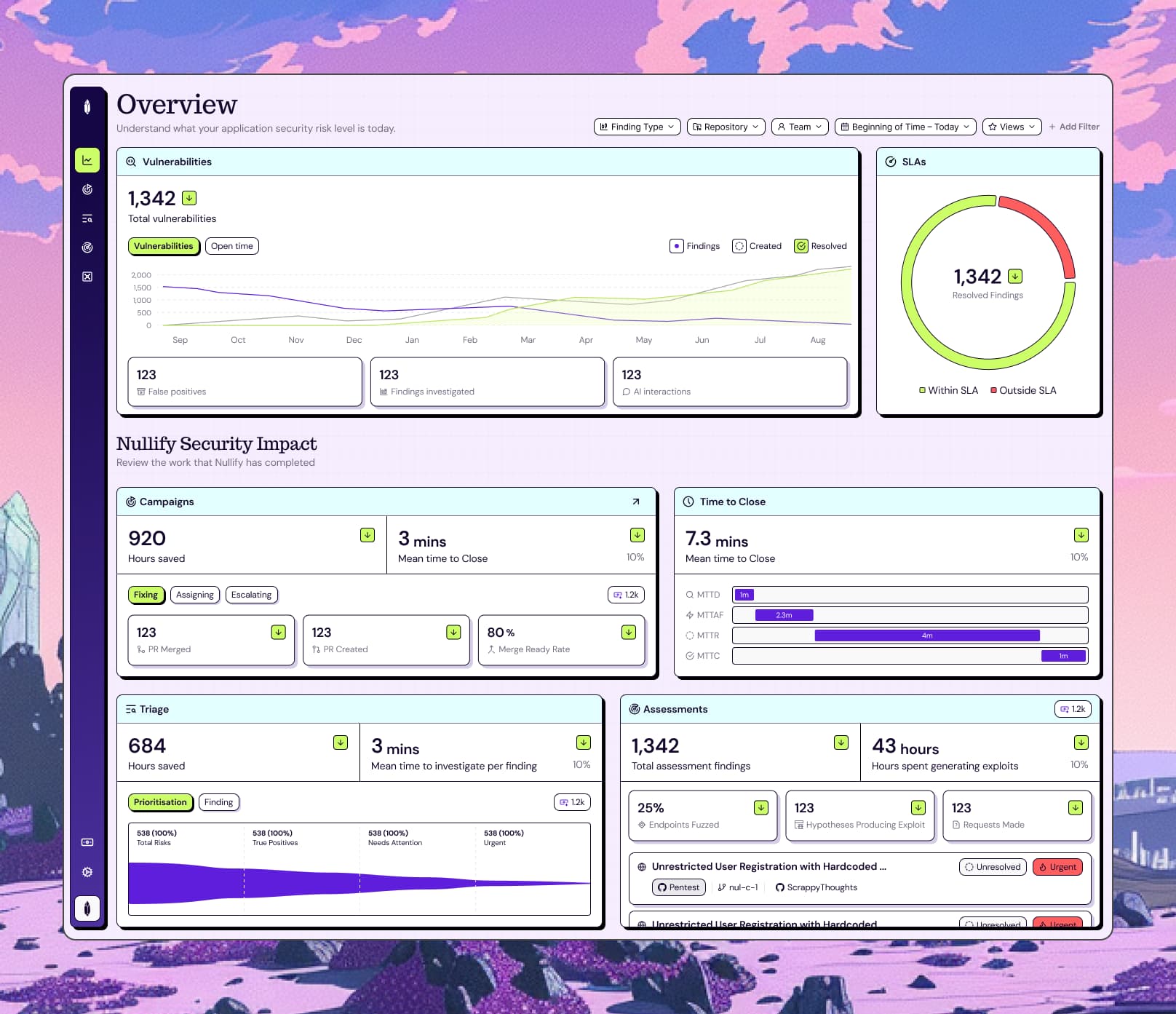
Nullify AI is an AI-driven security platform embedded in modern engineering workflows. It automatically identifies, triages, and prioritises vulnerabilities, enabling teams to remediate risk without slowing development.

Context

I joined to deliver a UI refinement, but quickly uncovered a deeper issue: users had difficulty proofing the automated triaging. The platform was technically powerful, but the reasoning behind risk prioritisation wasn’t clearly surfaced.

In security tooling, automation without transparency creates hesitation.

Four friends climbing over a wooden fence outdoors

Role

Designed the UX and interface refinement for explainable automation across core vulnerability triaging flows.

Designed:

  • Information hierarchy and prioritisation display

  • Remediation and triage workflows

  • State management consistency across modules

  • Worked closely with engineers to align UX logic with backend algorithms and risk models.

Problem

Nullify AI’s automation was technically strong but information was overwhelming which made it less actionable.

  1. Automated triaging felt opaque: users couldn’t easily see why certain vulnerabilities were ranked higher than others.

  2. High-signal indicators sat alongside dense, technical data, creating cognitive overload.

  3. Without structure or supporting context, automation appeared arbitrary, even when correct.

In the domain of security, this created a paradox: the smarter the system became, the less human control users felt. The challenge was to build an interface that conveyed why it’s confident — not just that it is.

Project Constraints

Security data is both high-stakes and complex any interpretation error could undermine credibility.

Balance depth & simplicity

Oversimplifying risk logic would erode confidence.

User Bandwith

Surfacing too much technical data would overwhelm, requiring more work to decipher.

Scalability

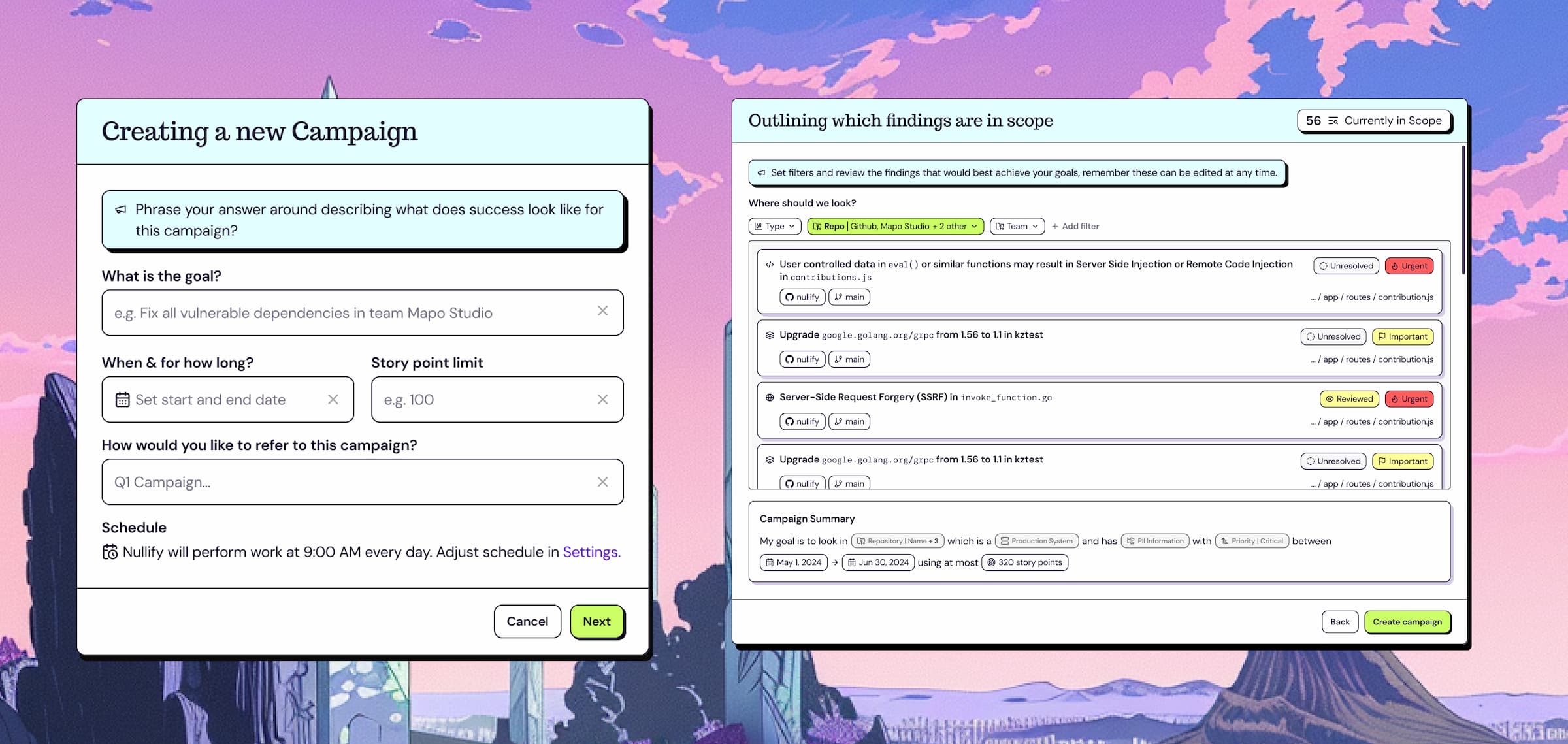
The redesign needed to support upcoming features and evolving complexity of filtering and goals.

Clarity & Prioritisation

Security data is high-stakes and inherently complex.

This demanded a careful balance of transparency, usability, and depth.
woman in black and white long sleeve shirt and blue denim shorts walking on beach during

Strategy

I anchored the redesign around four guiding principles:

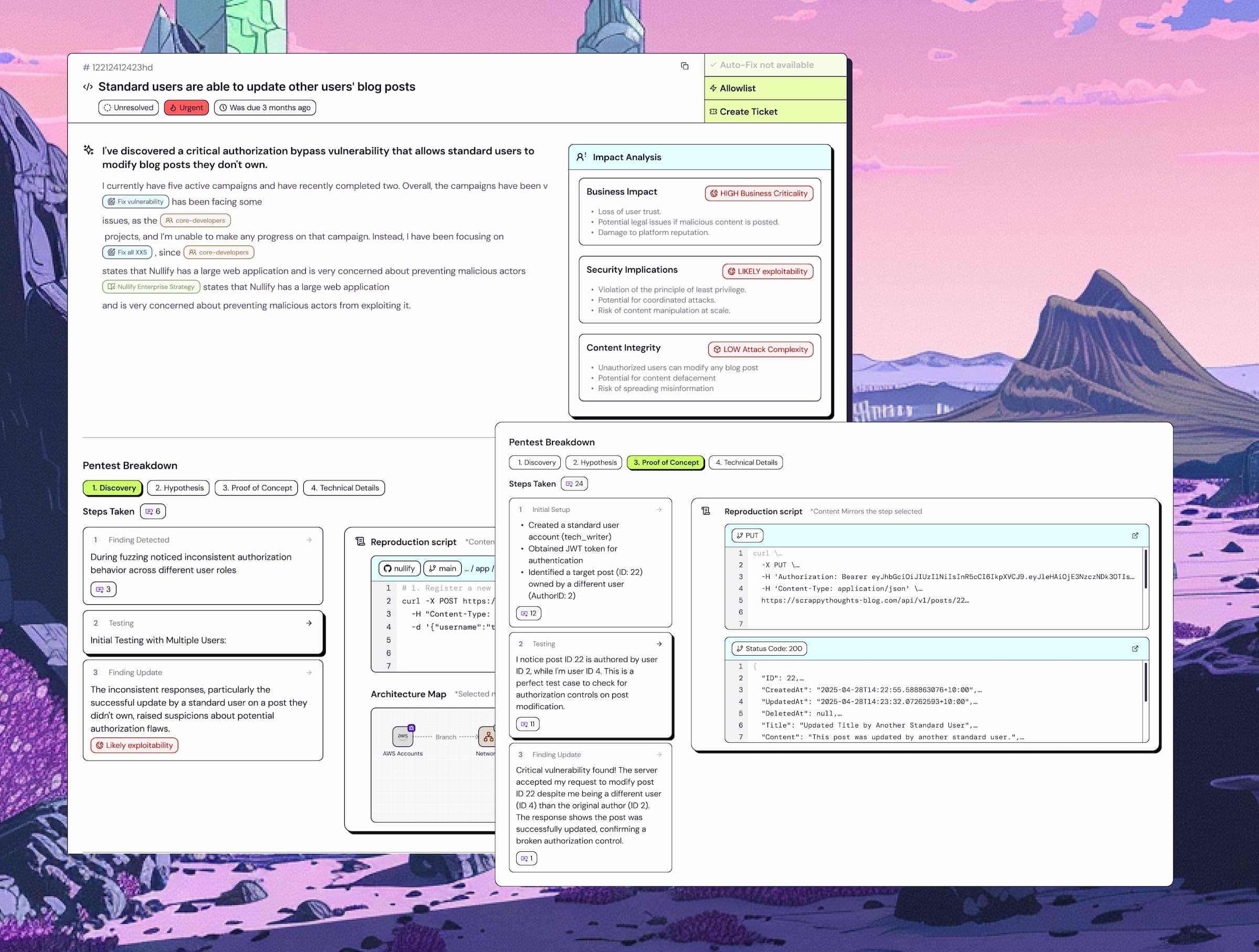
  1. Make intelligence visible — show how conclusions are derived, not just the end state.

  2. Structure information for triage — prioritise comprehension over completeness.

  3. Design for progressive depth — quick clarity first, then technical traceability on demand.

  4. Collaborate on truth, not aesthetics — work with engineering to ensure UX never misrepresents logic.
Interventions

Reframing the Problem as One of “Explainability”

01

Worked with the team to understand the underlying triage model how severity, confidence, and exploitability were calculated and mapped those relationships to UX vocabulary.

Increased the design focus from “showing data” to “showing reasoning.”

This reframing clarified design priorities and positioned the project as core to product credibility, not just aesthetics.

Restructured Information Hierarchy

02

High-level indicators and raw technical detail competed for attention, making it hard to triage efficiently or build trust in system judgement.

I reorganised core product flows to:


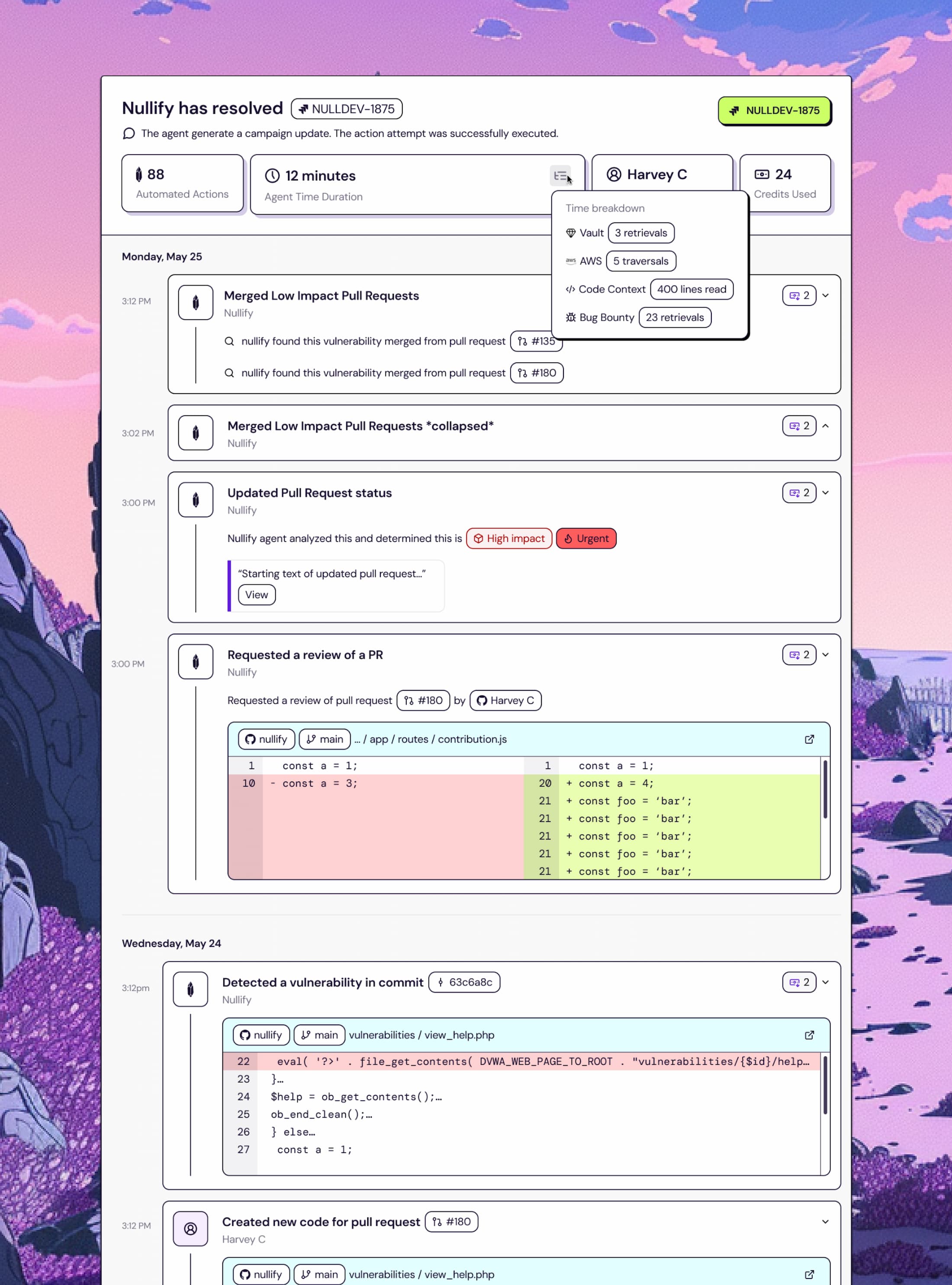
  • Surfaced why an issue is prioritised next to what it is.

  • Grouped high-signal summaries (severity, confidence, exploitability) at the top.

  • Pushed detailed metadata, logs, and traces behind progressive disclosure.

  • Reduced noise around vulnerability listings to highlight patterns and context..

Users could scan quickly, grasp risk drivers at a glance, and drill deeper only when needed improving speed and assurance.

Introduced Clear System Anchors

03

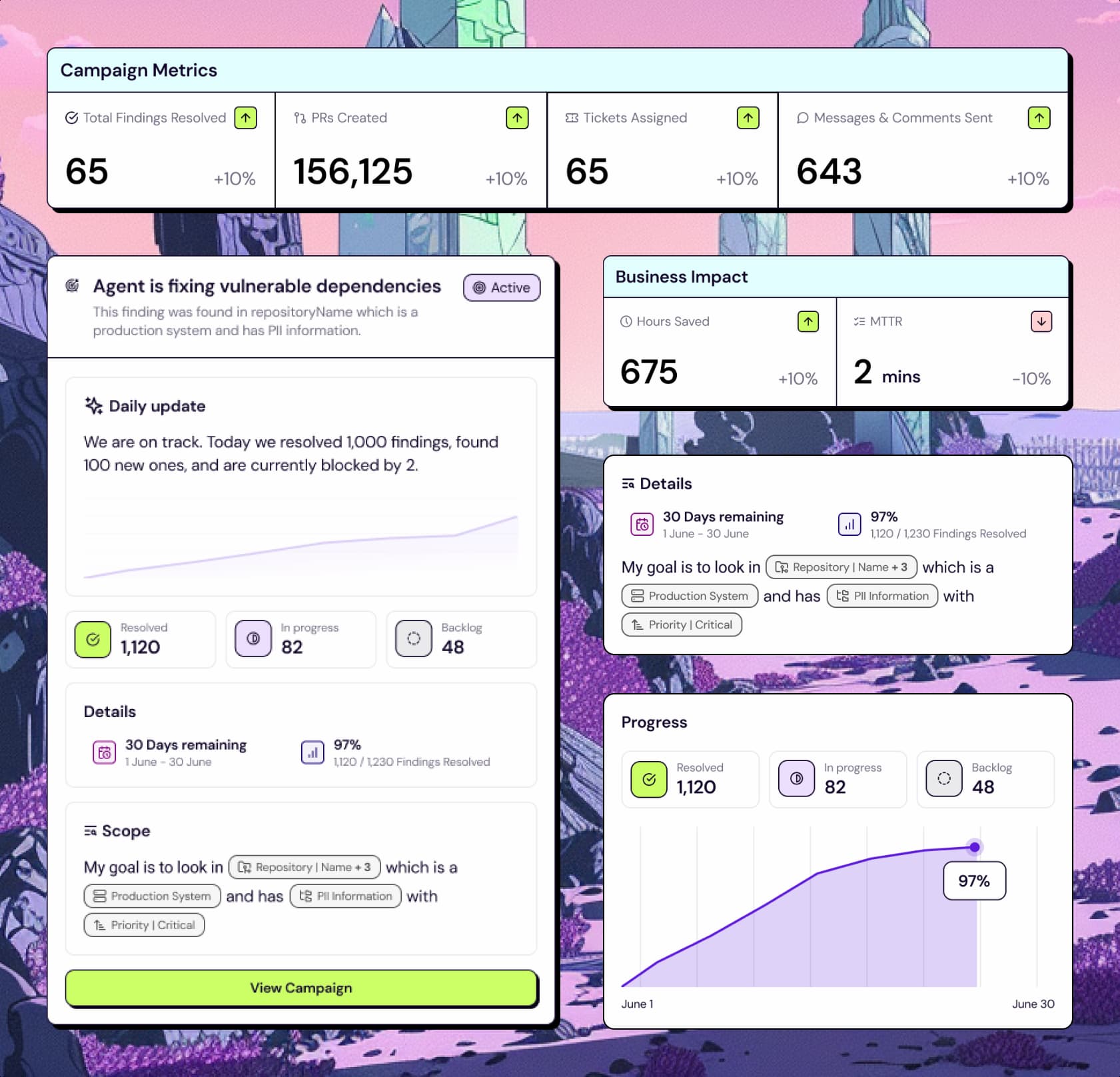
Inconsistencies in risk presentation, terminology, and state handling made the platform feel unstable and unpredictable.

Approach

  • Standardised risk scoring visuals and language.

  • Defined clear remediation states and handoff logic.

  • Improved grouping logic for related vulnerabilities.

  • Harmonised status states and confidence cues across workflows.

Created a more predictable, navigable experience that felt coherent across modules, reinforcing confidence through consistency.

Collaborated Closely with Engineering

04

Design interpretations risked drifting from system reality, and oversimplification could distort confidence metrics.

Given the technical depth of the platform, I worked directly with engineers to:

  • Co-map common backend logic and user-facing explanations.

  • Reviewed scoring algorithms to define explainable thresholds.

  • Designed fail states that showed uncertainty honestly, reinforcing credibility.

The collaboration ensured that “explainability” wasn’t a façade it reflected real model behaviour, not curated narratives.

Outcome

What began as visual polish became foundational to how users understood and trusted the platform.

Reframing the work around trust and clarity. The restructuring of the information hierarchy done with the team, allowed us to separate high-level risk signals from deep technical detail.

Progressive disclosure patterns, quick scanning and accessible due diligence clarified remediation pathways, and created more meaningful user actions across core flows.

Reinforcing Nuliffy’s value of streamlining security.

The result was a product experience that felt authoritative rather than overwhelming. New and existing partners responded positively to the redesigned flows, confidence in automated triaging improved, and the work expanded into onboarding and first-use experience.

Impact

Improved user confidence in automated triaging

01

Expanded into onboarding and first-use experiences, focusing on helping users form mental models of AI-driven risk prioritisation.

03

Strengthened alignment between design and engineering around explainable intelligence

02

Stronger articulation of Nullify AI’s technical value within product flows.

04

Improved user confidence in automated triaging

01

Expanded into onboarding and first-use experiences, focusing on helping users form mental models of AI-driven risk prioritisation.

03

Strengthened alignment between design and engineering around explainable intelligence

02

Stronger articulation of Nullify AI’s technical value within product flows.

04

Improved user confidence in automated triaging

01

Strengthened alignment between design and engineering around explainable intelligence

02

Expanded into onboarding and first-use experiences, focusing on helping users form mental models of AI-driven risk prioritisation.

03

Stronger articulation of Nullify AI’s technical value within product flows.

04

(3)

Reach out

Whether you have questions

Or just want to explore options

Hello@Clems.Studio

Always looking to be

Always looking to be

C

H

A

L

L

E

N

G

E

D

.

C

H

A

L

L

E

N

G

E

D

.

C

H

A

L

L

E

N

G

E

D

.

C

H

A

L

L

E

N

G

E

D

.

(3)

Currently working @ Mapo Studio

Always open to hearing about new orgs!